



From Mourinho to Rosenier, the "Manager" is dead, and the "Gear" rules now.


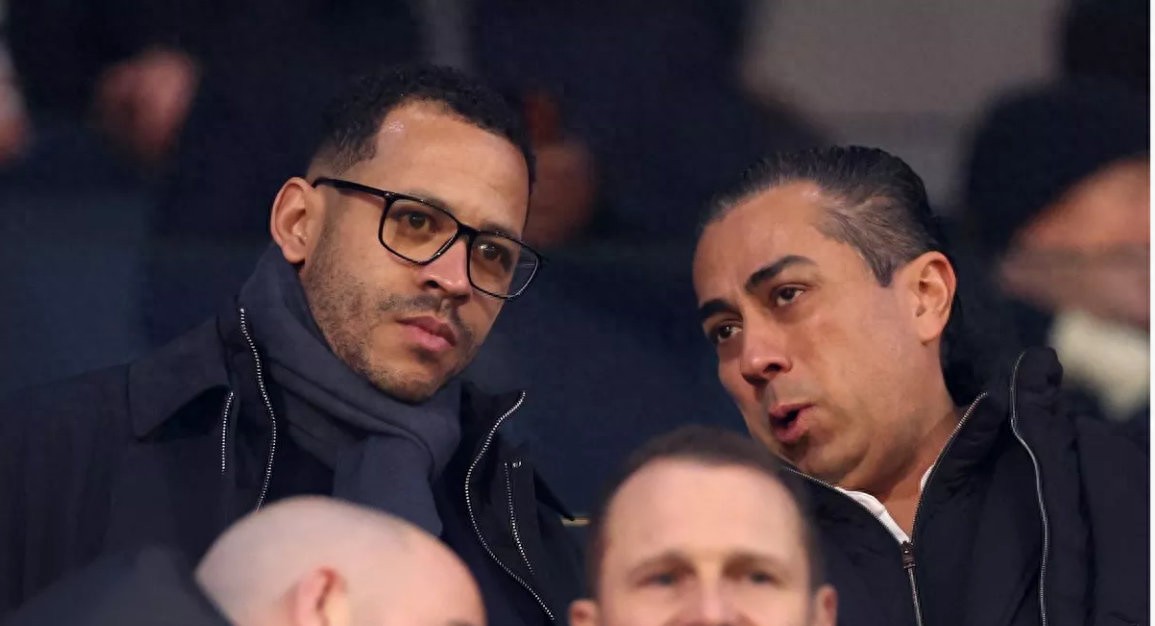
Written by Han Bing. Manager or Head Coach? For Chelsea, this remains a Hamlet-like question. Maresca aggressively sought “manager” powers from the American owner at Stamford Bridge, with results known to all. His successor, the seemingly gentle English young coach Rosenier, insisted before his debut last Saturday that he was not a “puppet coach,” though clearly no one believed him.
The battle between manager and head coach has actually been ongoing at Stamford Bridge for 18 years. Since July 2007, when Russian owner Abramovich appointed Grant as sporting director, Chelsea has seemed trapped in this nightmare. The owner changed from Russian to American, yet the nightmare not only persisted but worsened. Maresca, surrounded by five directors, reached his limit; what can the low-profile Rosenier do?
The unwinnable "power game"
The traditional British football system of a manager handling all first-team affairs has faded with the influx of continental European football culture, especially foreign capital. The dismissals of Maresca and Amorin reflect the intensifying “power struggle” in first-team management. However, older Chelsea fans should be familiar with this. Since the Russian owner appointed his friend Grant as sporting director in summer 2007, the clash between manager and head coach at Stamford Bridge has been a fierce “power game.”
When Abramovich signed Mourinho for a high fee, the “trinity” of Mourinho, CEO Kenyon, and owner Abramovich brought unprecedented success that disrupted the Premier League. Kenyon recalls the “trinity” fondly: “The three of us would sit down and make decisions. The key was that each of us knew our role.” But in summer 2006, when Abramovich ignored Mourinho’s objections and paid a record fee for Shevchenko, the loss of absolute trust shattered the stable power structure.
In summer 2007, Grant took office with official duties to “coordinate football affairs across the club.” Recommended by Zahavi to Abramovich, he broke the previously well-functioning power system at Chelsea. Like the Chelsea of 18 years later, Kenyon recalls Mourinho and Abramovich also “clashed,” with Kenyon acting as a trusted mediator. Despite most players opposing it and many believing Mourinho could have won the 2008 Champions League if retained, the outcome was irreversible. As Kenyon later reflected, no one foresaw this as the defining start of the manager vs. head coach “power game” at Chelsea.
Subsequently, from Abramovich’s Dutch advisors’ pick, Emeranalo, to his long-time confidante Granovskaia, the prolonged power struggle between directors and head coaches ran through Abramovich’s era. Even Mourinho’s second spell at Chelsea ended with defeat to technical director Emeranalo. Ten years ago, firing Mourinho, Emeranalo’s admission surprised even the British media: “The coaching change was made to protect the club’s interests.” As Chelsea’s only sporting director with playing experience, Emeranalo’s lesser-known background is his career in the United States.
When American ownership took over Chelsea five years later, the American-style professional sports management structure could already be traced back to Emeranalo. As for Granovskaia, who effectively performs sporting director duties, her tough style clearly reflects owner Abramovich’s will. The more successful this “Iron Lady” of 25 years has been in coach recruitment, transfers, and commercial negotiations, the more irreversible the changes in the club’s first-team power structure have become. Even when Tuchel was hired with the title “manager,” he was in fact just a “head coach.”
Will Stamford Bridge never have a “Manager” again?
Rosenier, promoted from Chelsea’s French “subsidiary” as an emergency coach, emphasized in his debut that he has enough decision-making power, trying to shake off the label of “puppet coach.” He even claimed to be a Manchester United fan hoping to replicate the young but hugely successful “Class of ’92” at Chelsea. But Ferguson was one of the Premier League’s greatest “managers,” while Rosenier is only Chelsea’s “head coach.” Like predecessors Potter and Maresca, he signed a contract over five years, yet the experiences of the former two prove that a long contract does not guarantee more power.
It’s hard to imagine any newly appointed head coach being so “grateful.” Rosenier’s attitude proves there is no doubt about the power struggle between Chelsea’s head coach and directors. As Chelsea becomes a club focused on developing young players for profit, the club’s strategic focus has shifted away from competing for titles. At this point, the head coach becomes a “developer” of the first team. Rosenier’s appointment itself proves the directors’ overwhelming power at Chelsea.
For Chelsea’s major shareholder, Eghbali, finding a coach who can lead the team to success is no longer the top priority. Chelsea represents an extreme case of first-team power struggles in modern European football. Stamford Bridge will no longer have a “manager,” only a “head coach” who must obey the directors’ orders and become a cog in this bloated management system. Because Stamford Bridge has two owners—major shareholder Eghbali and chairman Bo Li—interfering more and more in first-team affairs, plus five directors and a medical department reporting to them, all forming the so-called “integrated football management structure.”
Unless Chenghu Capital sells Chelsea, the head coach at Stamford Bridge will still not get the power he wants. Rosenier, like predecessor Potter, who once thought he could survive in this system through a gentle personality and polite upward management, only lasted seven months. Rosenier previously wrote a column for The Guardian, recalling one of his most memorable articles about witnessing the similarly humble and polite Bilic being humiliated at West Ham: “For the first time in my life, I began to question my ambition to become a coach.”
Compared to the brutal power struggle between Chelsea’s directors and coaches, Bilic’s experience was minor. How much longer can the equally gentle and polite Rosenier survive at Stamford Bridge? At least for now, almost no one besides himself holds optimistic expectations.


Wonderfulshortvideo
The footwork, the finish 🤌


The Wirtz x Sané link-up 🔗
Class personified.
yamal getting better raphinha goals today raphinha vs osasuna yamal barcelona highlights yamal pass today
Griezmann with the cool finish 🥶
“afcon funny moments”
🤤🤤
 Links
Links
 Contact
Address:UNIT 1804 SOUTH BANK TOWER, 55 UPPER GROUND,LONDON ENGLAND SE1 9E
Number:+85259695367
E-mali:icecmxtdaf@gmail.com
 App
App


