



"Clashing Commanders": The Root of Manchester United's Chaos


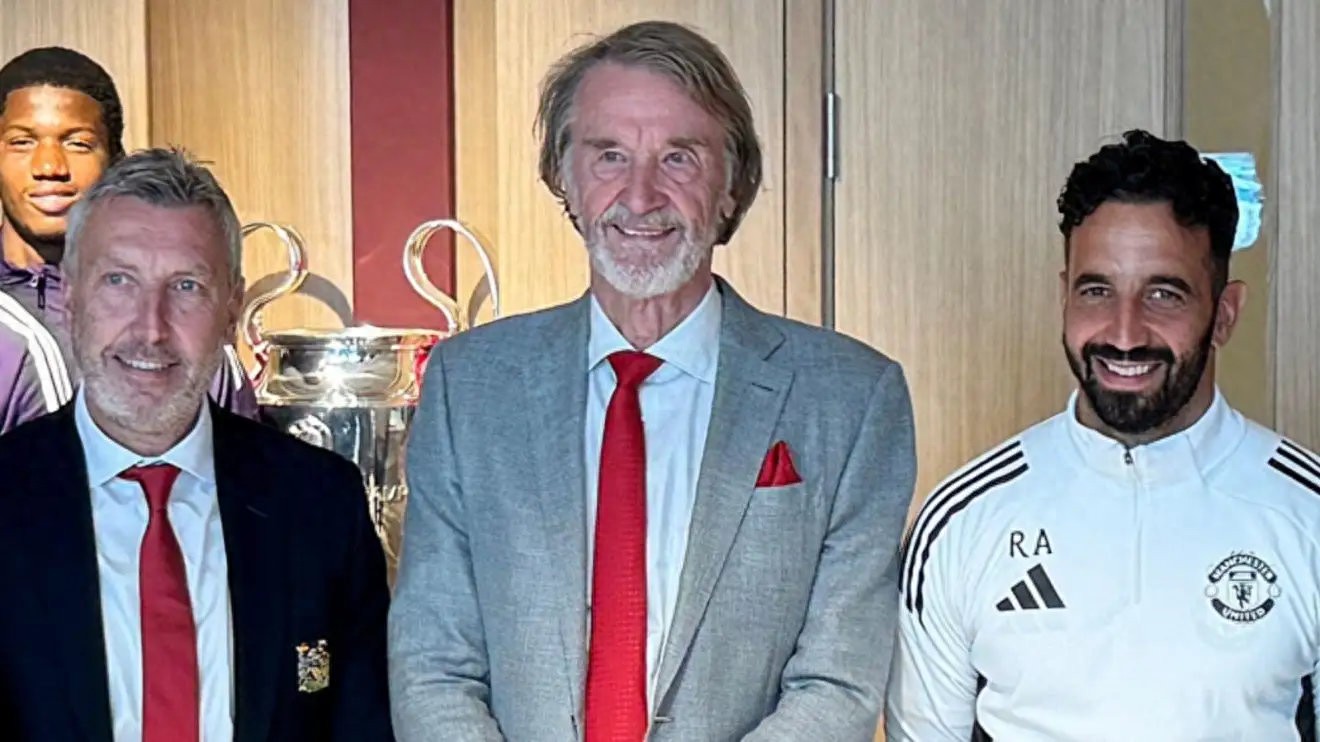
By Han Bing The head coach and sporting director of a football club can be likened to a "general and prime minister." Historically, discord between these roles is a grave taboo. Yet, the structure of contemporary football clubs almost guarantees clashes over transfers, tactics, and more, sometimes culminating in a total split like Manchester United’s. Former United manager Amroliyn’s provocative remarks about being a "manager" rather than a "head coach" cost him his job and exposed the club’s management crisis.
In recent years, European football has increasingly valued professional managers. Many successful sporting directors have stepped from behind the scenes into the spotlight, gaining far more media attention, even becoming highly sought-after figures alongside players and coaches. Yet, in most cases, they remain the unsung heroes behind successful coaches. But when a sporting director, like Manchester United’s Wilcox, constantly tries to flex authority over the coach, disaster is inevitable. The so-called conflict between "manager" and "head coach" essentially reflects this management breakdown between "general and prime minister."
Director Stealing the Spotlight, Discord Between Commanders
After Amroliyn’s dismissal, the media knew only that the Portuguese coach claimed he was at Manchester United as a "manager," not a "head coach," and that his fierce disputes with sporting director Wilcox directly led to his firing. The Sun revealed Wilcox’s arrogant claim that he was more of a "manager" while Amroliyn was merely a "coach," which enraged Amroliyn. It remains unclear if this was said at the January 2 crisis meeting that triggered Amroliyn’s outburst, but considering Amroliyn’s harsh criticism after the January 4 Leeds match, it’s evident Wilcox made similarly overstepping remarks.
Murtaugh, brought to Manchester United in 2013 by Moyes from Everton, has witnessed the tenures of four United managers: Solskjær, Carrick, Rangnick, and Ten Hag. Compared to Wilcox, who dominated the spotlight during Amroliyn’s era, Murtaugh has been more low-key. Most of United’s controversial transfers are directly linked to Ten Hag, who holds the "manager" title. Yet, in the seismic upheaval that followed Amroliyn’s sudden sacking, sporting director Wilcox clearly played the leading role.
In April 2024, 54-year-old Wilcox was recruited by Manchester United from Southampton to serve as technical director under sporting director Ashworth. However, until his promotion to sporting director last June, little was known about this influential "behind-the-scenes manager" at United. It was only when Cunha joined last summer that his sporting director title was publicly mentioned. Previously at Southampton, where he served as sporting director for just nine months, he helped sign 13 players, mostly on loan or free transfers, aiding Southampton’s return to the Premier League after only one year.
Wilcox spent over a decade working in Manchester City’s youth academy before following former City CEO Bellarda to Manchester United, though he started working at United earlier than Bellarda and Ashworth. Originally tasked with bridging communication between management and the head coach, he instead took center stage in the transfer market. His status rose rapidly after signing young center-back Yoro in summer 2024, attending United’s executive board meeting in September. In May 2024, he even traveled to Monaco to join the crisis meeting where United’s top executives initially decided to sack Ten Hag. Yet, after an unexpected FA Cup win and failed negotiations with potential successors, the club renewed Ten Hag’s contract. When results later spiraled out of control under Ten Hag’s transfer decisions, Wilcox was among those who decided to dismiss him.
Clashing Philosophies, No Room for Cooperation
In December 2024, sporting director Ashworth resigned in opposition to Manchester United hiring Amroliyn, whose philosophy conflicted with his own. Initially, Wilcox shared this opposition but stayed on, becoming the dominant figure controlling transfers. Both Ashworth and Wilcox were skeptical of Amroliyn’s three-defender system, believing it would force United to spend heavily to fit the formation and that Premier League champions rarely use such a setup. However, Wilcox soon changed his stance, maintaining good relations with both Dutch coach Ten Hag and Amroliyn toward the end of Ten Hag’s tenure, even growing closer to the latter.
Amroliyn’s early appointment was partly due to Wilcox submitting a positive coaching assessment to United’s hierarchy. But last summer, when Wilcox fully led United’s transfer dealings, Amroliyn realized what he had lost. Wilcox oversaw the transfers of Cunha and Mbemo, but the failed signing of Draper raised doubts about the sporting director’s stubbornness. Draper, a young talent Wilcox had promoted during his time at Manchester City’s academy, should have been an easy transfer. However, Wilcox’s refusal to compromise on fees allowed Chelsea to swoop in.
Most importantly, last summer’s transfer window worsened the relationship between Wilcox and Amroliyn. Amroliyn wanted Aston Villa’s goalkeeper Martinez, striker Watkins, and PSG’s left-back Nuno Mendes, but received instead the 23-year-old unknown goalkeeper Lamens, the "more promising" Shiesko, and Doku. Moreover, Amroliyn repeatedly sought to bring in Sporting Lisbon’s trusted players Kunda, Diomande, and Uelman, all rejected by Wilcox, deepening their feud. Their conflict finally reached a breaking point during the winter transfer window, when Wilcox not only refused further signings but also demanded tactical changes from Amroliyn.
As a player, Wilcox was a key member of Blackburn’s 1994/95 title-winning team, though he was introverted then. After gaining full control as Manchester United’s sporting director, he revealed a "different self." His speech at United’s 40th anniversary dinner for legendary players last September was seen as the deep root of his confrontation with Amroliyn: "I know my role isn’t to coach, but inside I still identify as a coach. This gives me an edge in assessing transfer targets but also makes me want to interfere in coaches’ decisions."
This inadvertent confession proves Wilcox never accepted Amroliyn’s tactical ideas. With such fundamental philosophical conflicts from the start, how can a head coach and sporting director cooperate as closely as at Manchester City, Arsenal, or Liverpool? United legend Schmeichel openly criticized Wilcox for being overly "arrogant," warning this arrogance will continue to cause problems with future managers: "If he feels offended by Amroliyn’s remarks, then the criteria for deciding a coach shouldn’t be emotional." But this is the reality at Manchester United: a powerful, almost unchecked sporting director seizes every opportunity to display his authority publicly. For any future United head coach, this is obviously bad news.


Wonderfulshortvideo
The footwork, the finish 🤌


The Wirtz x Sané link-up 🔗
Class personified.
yamal getting better raphinha goals today raphinha vs osasuna yamal barcelona highlights yamal pass today
Griezmann with the cool finish 🥶
“afcon funny moments”
🤤🤤
 Links
Links
 Contact
Address:UNIT 1804 SOUTH BANK TOWER, 55 UPPER GROUND,LONDON ENGLAND SE1 9E
Number:+85259695367
E-mali:icecmxtdaf@gmail.com
 App
App


