



Initial impressions of the China-Korea youth competition: 3 wins out of 4 matches on the first day, what makes the Korean teams stand out?



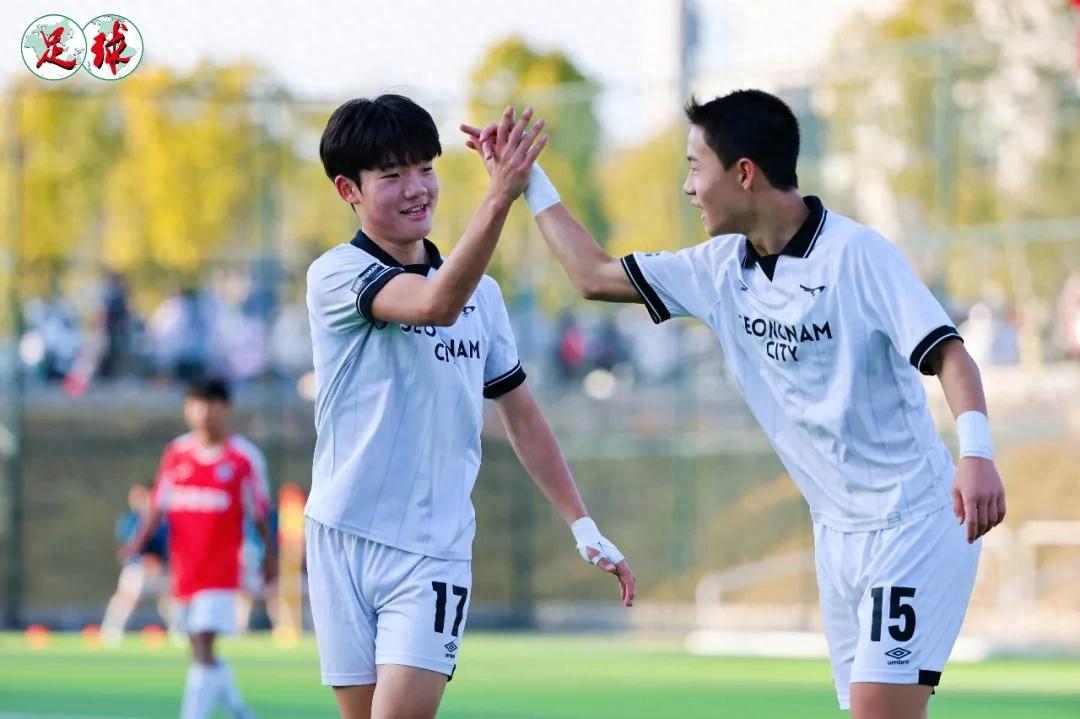
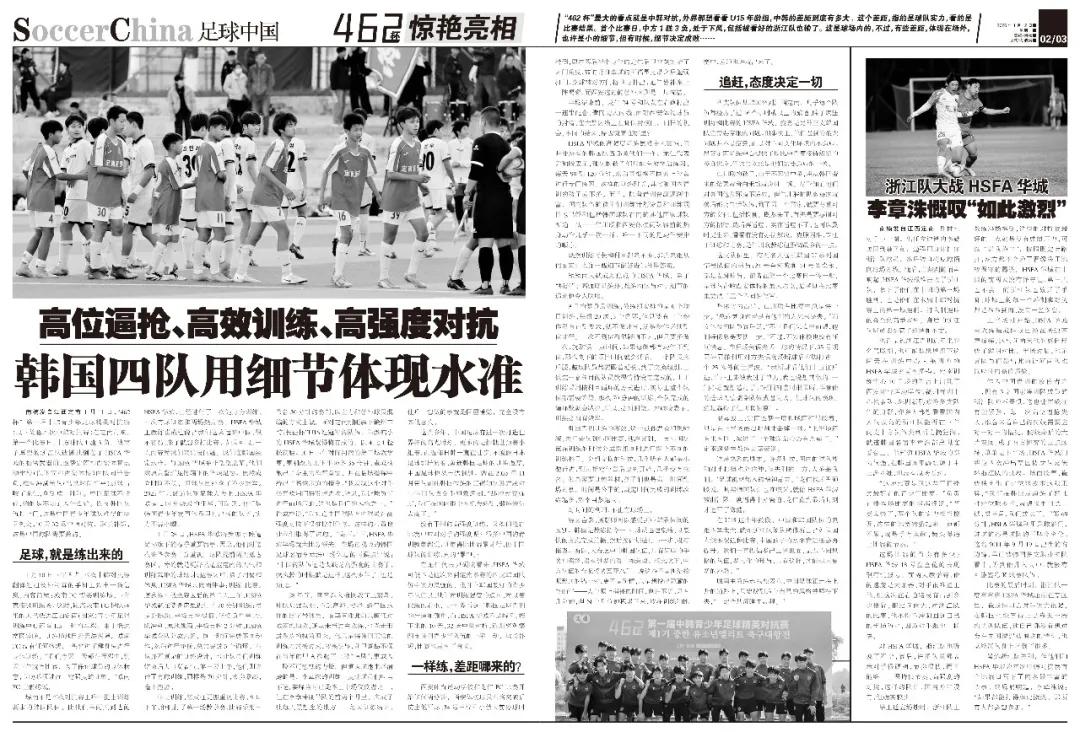
Reported from Dingnan, Jiangxi by Nan Nan On January 11th, the inaugural “462 Cup” China-Korea Youth Football Elite Challenge (hereafter referred to as the China-Korea Challenge) began in Dingnan. On the first match day, the Chinese side achieved 1 victory and suffered 3 defeats. The highly anticipated Zhejiang team unfortunately fell to HSFA Hwaseong’s secret weapon, while Dingnan Dream and Xi’an Sports School (hereafter Xi’an Sports School) also lost their matches. Only the Shanghai Port youth squad managed to win, defeating Yongin on penalties after a draw in regular time. Chinese football is not afraid of losing, but it fears not understanding the reasons behind the loss. With four Korean teams arriving, this is a rare learning opportunity for Chinese youth teams. Across 10 days and 32 China-Korea matches, learning from each other’s strengths is exactly what the Chinese teams need to do.

At 5 PM on January 10th, Park Ha-rim, head of the translation team for the China-Korea Challenge, received a brief message on his phone: Seongnam FC requires a training ground, get off the bus and go straight to training. At that moment, the Seongnam FC youth team bus was still 1.5 hours away from the Jiangxi Dingnan National Youth Football Training Center. Since they arrived late at the venue and training fields were unavailable, Seongnam FC did not complain and headed straight to the gym for physical training. “We’ve been traveling all day today, and with a match tomorrow afternoon, it’s essential to have a certain intensity of training tonight to maintain the players’ physical condition,” said the Seongnam FC head coach.
Seongnam was not the only Korean team requesting training facilities during this Challenge. HSFA Hwaseong, which arrived two days earlier, had already completed one gym session, one ball training, and two warm-up matches. HSFA Hwaseong’s head coach, Choi Sung-joo, said, “It’s not easy coming all the way to China, so we want to play as many matches as possible. If possible, two matches a day are no problem for us; we often do this in Korea.” HSFA Hwaseong is far from ordinary; they belong to the Hwaseong Football Association under the Gyeonggi-do Football Association. Although a relatively new club, they have already won several championships. In the 2025 Gyeonggi-do Autumn Football Tournament, HSFA Hwaseong were runners-up in the U14 category. They are a team forged within Korea’s youth football system and are a force to be reckoned with.
On January 28th, HSFA Hwaseong will participate in an important spring tournament organized by the Gyeonggi-do Football Association, so they take this visit to China very seriously. They arrived two days early to better adapt to Dingnan’s weather and training facilities. After arriving, besides eating and resting, HSFA Hwaseong focused solely on two things: training and matches. How did they train? On the morning after arrival, HSFA Hwaseong spent 70 minutes in the gym performing exercises such as lunges, plank knee raises, weighted sit-ups, resisted sprints, box jumps, and a 2-minute plank. The team was divided into six groups, each performing different exercises simultaneously before rotating, completing five cycles in total. Although the training seemed straightforward, the players were gasping for breath afterward. On the third morning, they conducted a 70-minute ball training session with a tight, fast-paced rhythm.
Compared to training, Choi Sung-joo values matches even more. On the afternoon of the 9th, they played their first practice match, using three 30-minute periods, mixing starters and substitutes. Facing Dingnan Dream, which had just won the U16 “New Long March Cup” in Ganzhou City, the younger HSFA Hwaseong team played confidently and won easily 4-1. In the second practice match on the afternoon of the 10th against Henan, the format changed to two 35-minute halves. Choi deployed his full starting lineup and instructed a high pressing style during the game.

“I noticed this opponent likes to start attacks from the goalkeeper, so I told my players to press high up the field, which is also part of our style,” said Choi Sung-joo. “I know some Chinese players struggle to control the ball under intense pressure, and this tactic helped us score goals.” Under high pressure, HSFA Hwaseong led by a large margin at halftime. Korean football legend Lee Jang-soo, watching from the sidelines during halftime, commented, “Chinese teams still lack experience in high-intensity matches. It was the same when I coached here years ago, and it hasn’t changed.”
Twenty-eight years ago, before Lee Jang-soo coached Weichuan Island in Chongqing, the team was strong with national-level players like Gao Feng, Jiang Feng, and Peng Weiguo. Lee had only been an assistant coach at Seongnam and had never been a head coach or developed a systematic coaching philosophy. He simply brought Korean standard training methods, which had a clear impact. Weichuan Island sparked a “Korean wave” in the Chinese Jia-A League and became a formidable force. However, what Chongqing fans may not know is that Lee’s training was once extremely tough for players. Jiang Feng, already a top local midfielder, found those first two months under Lee so grueling that his bed was the only place he longed for — after training each day, all he wanted was to sleep with no other thoughts.
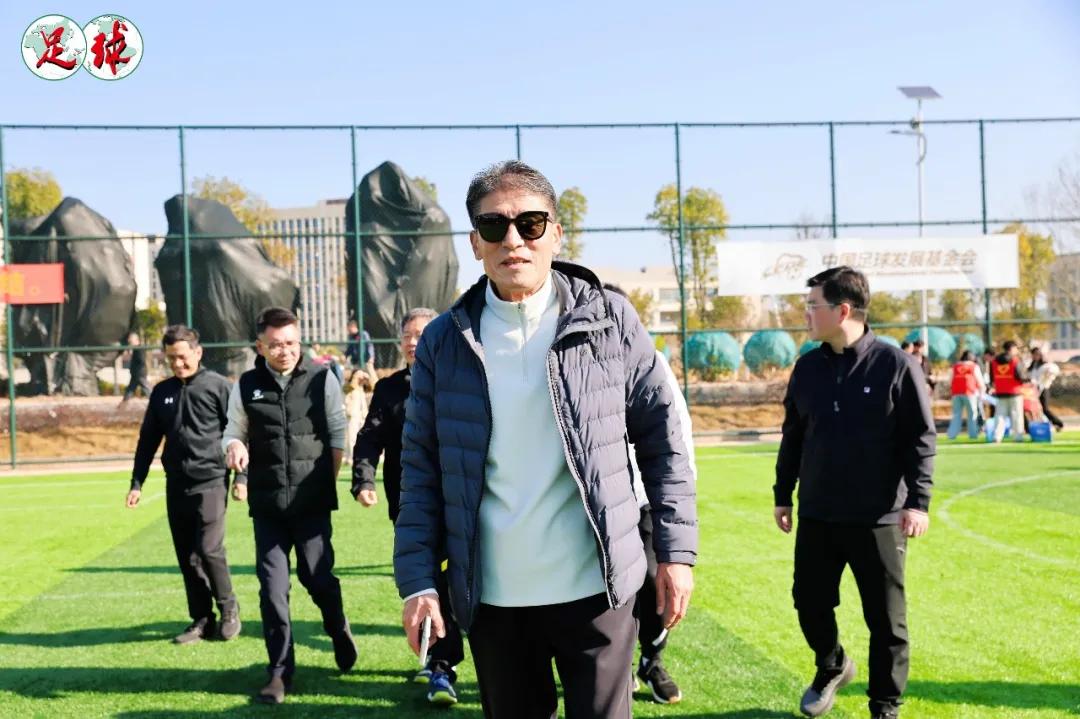
Over the years, Chinese football had one highlight of qualifying for the World Cup but mostly failed in World Cup qualifiers. Meanwhile, neighboring Japan and Korea have kept progressing. Even without the qualitative leap of Japanese football, Korea’s training intensity has never been matched by Chinese football. Sun Longwei, team leader of San Zhen who trained in Korea in November 2025, was deeply impressed by matches against Korean teams: “That kind of intensity is rarely experienced domestically; it’s extremely valuable for development.”
Without regular high-intensity training, how can players cope with opponents’ intensity during matches?
According to Yongin representative Yoon Seok-jun, HSFA Hwaseong might not be the strongest among the four Korean teams here, nor the best youth team in Korea, but their pursuit of training intensity and emphasis on learning through competition shows the rigor and focus of Korean youth football training. HSFA Hwaseong is not an exception. Over the next 10 days and 32 China-Korea matches, closely observing these four Korean youth teams to learn from their strengths is what makes the competition meaningful.

Just two minutes into the match between Xi’an Sports School and Incheon United, a Xi’an player broke through on the right and delivered a low cross. Number 34 Wang Fuxing slipped while controlling the ball near the penalty area. The Incheon defender, who had been half a step behind, immediately blocked the shooting angle. Forced to shoot while turning his back, Wang’s shot was saved by the opposing goalkeeper. Cheers erupted from Incheon’s bench, while Xi’an’s substitutes expressed regret.
Before halftime, Incheon United’s number 24 and teammates executed a series of passes on the right flank, cutting inside horizontally. Despite Xi’an defenders’ efforts to block, the player struck a low left-footed shot from the edge of the box and scored. Similar chances, different outcomes — what caused the difference?
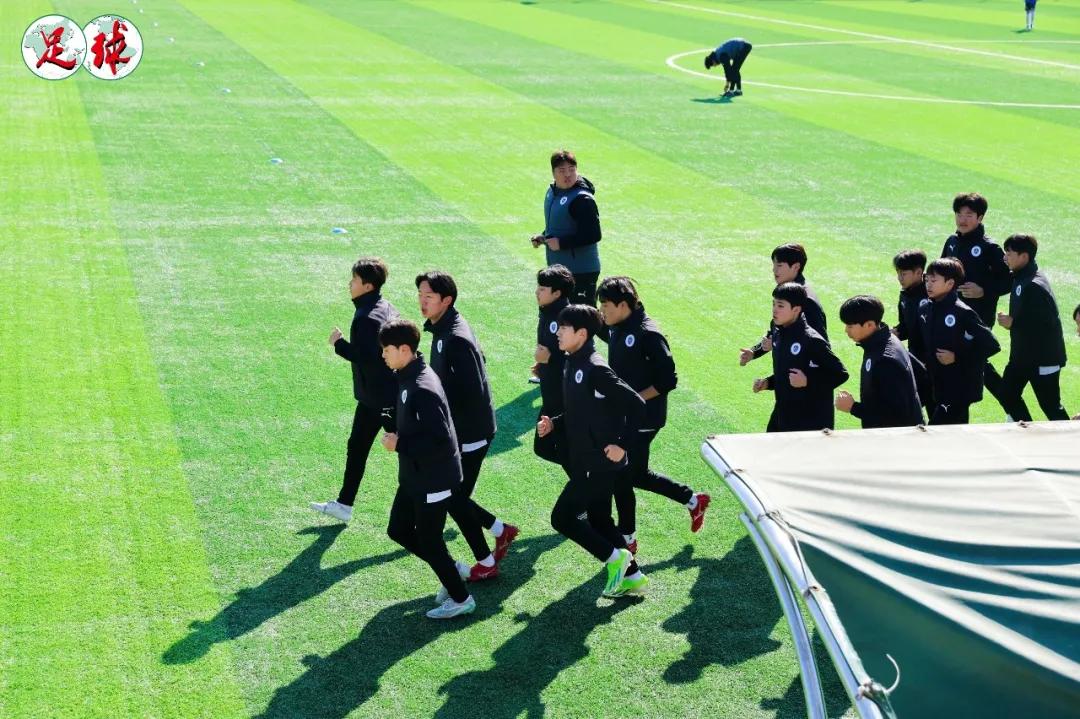
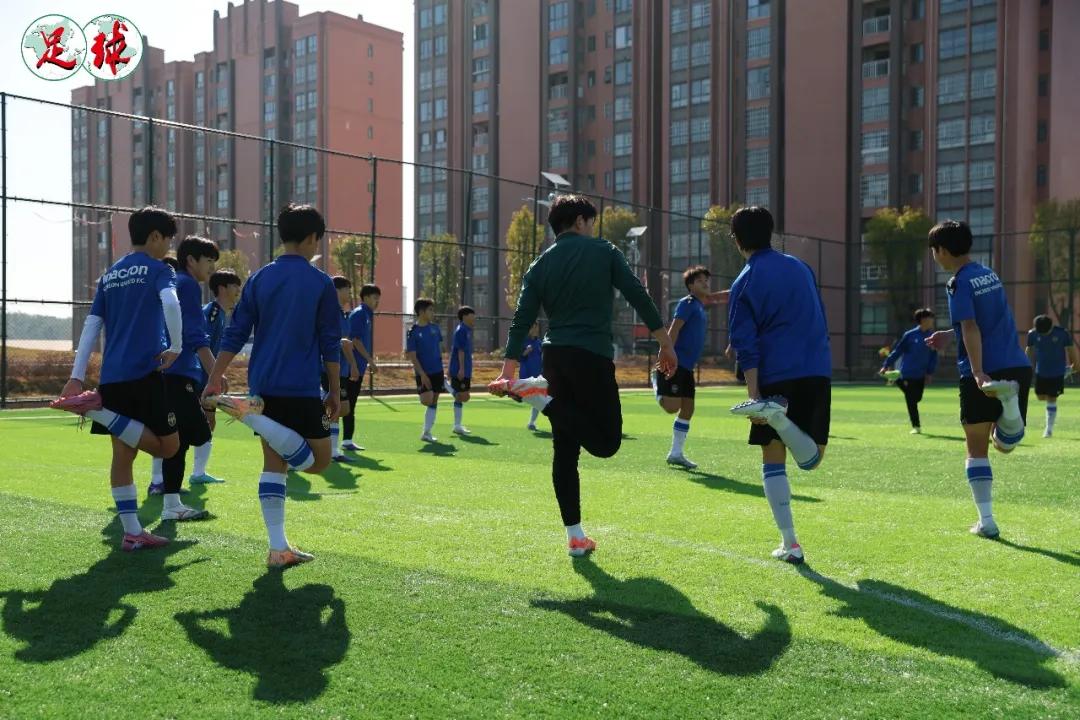
Though HSFA Hwaseong’s high-intensity training is impressive, not all Korean teams train like them. Yongin’s Yoon Seok-jun said their players can only practice after school for 90 to 120 minutes daily, followed by position-specific drills. This training duration is roughly the same as that of domestic youth players. Moreover, as youth training resources improve, domestic teams’ training plans and drills have gradually aligned with those of other countries, including Korean teams — the warm-up routines of Incheon United and Xi’an Sports School before matches are almost identical, differing only in the order of exercises.
If training time and content are similar, where does the gap come from? Perhaps some details can reveal the answer.
HSFA Hwaseong, which quickly became a focus in just two days, is not only “obsessed” with high-intensity training but also meticulous about details, impressing both coaches and players.
During the gym session on the 9th, the coaching staff arranged six exercises, 20 reps each, for five cycles. However, if any movement was not performed correctly, that repetition would not count. The requirement for perfect form may seem minor, but doing extra reps takes time. If multiple exercises are incomplete, the schedule for remaining activities is delayed. When a player slows down, the whole group must extend their training. When groups rotate, those who finished a set must wait for others to complete theirs. Because the training cycles through exercises, the entire team ends up waiting. This means the total number of cycles completed in 70 minutes decreases, so precision is critical. Yoon Seok-jun emphasized that training must be efficient.
Sun Longwei was deeply impressed by the efficiency of Korean youth training. During a trip to Korea last year, he noticed a Korean team split into two groups doing different drills simultaneously. When switching groups, almost everyone jogged quickly to the next station and started immediately with no delay. If equipment was needed, players promptly fetched it from the sidelines. Time is equal for all, and the more repetitions completed within the allotted time, the higher the efficiency.
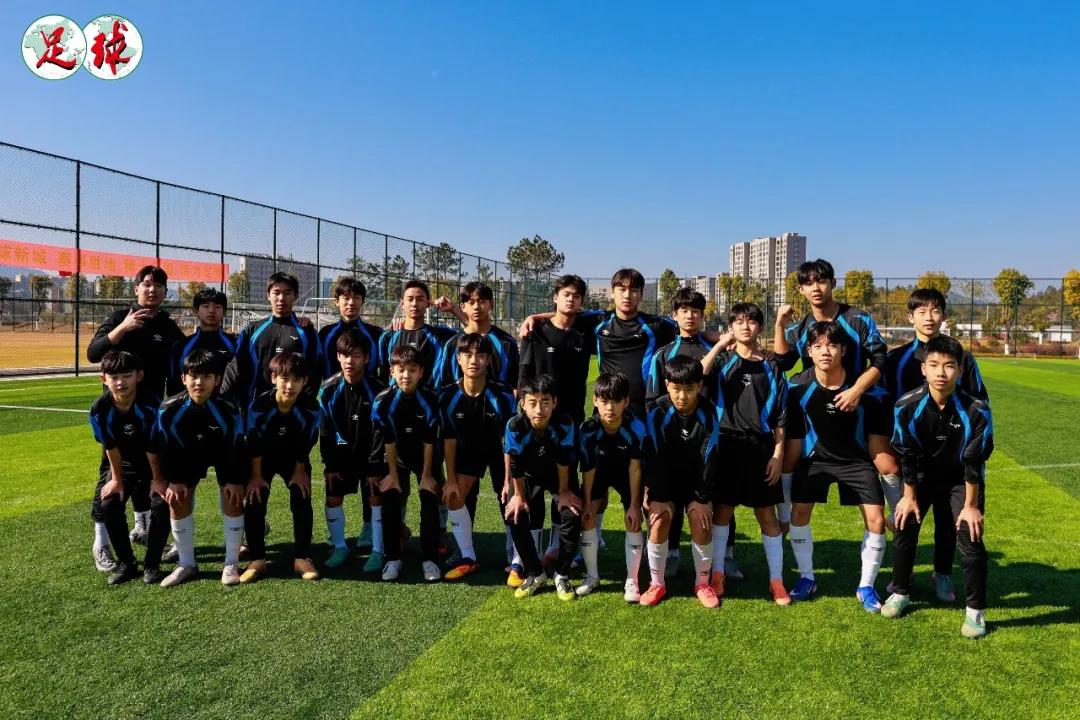
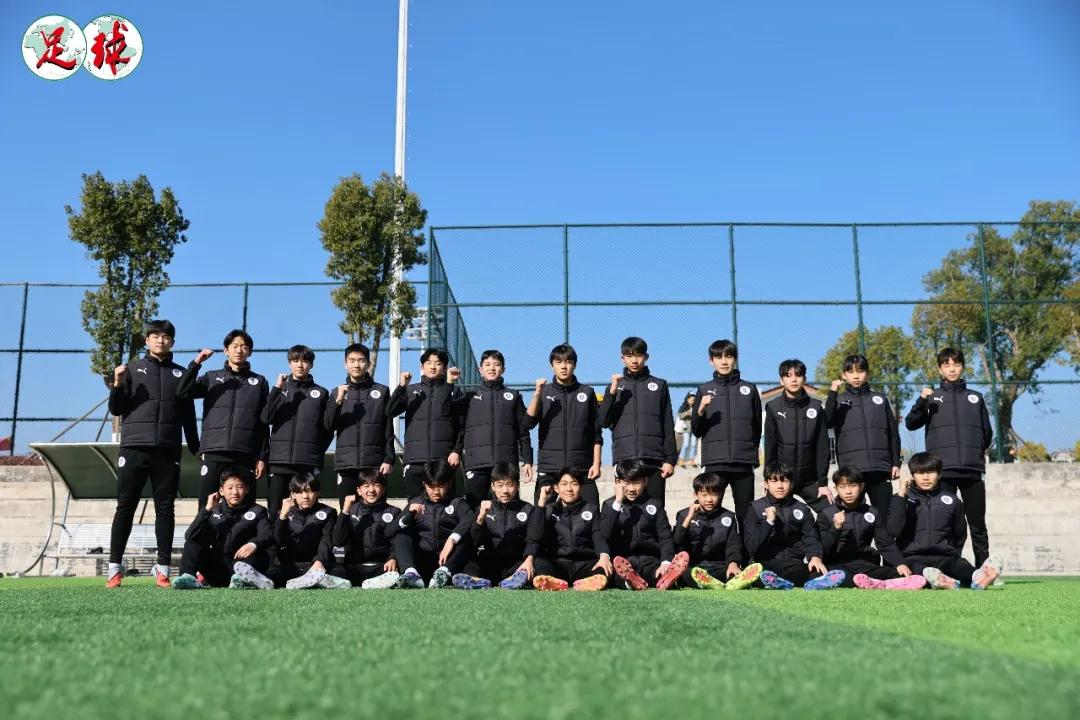
This efficient use of time extends beyond the field. During team photo sessions, photographers could feel the Korean teams’ high efficiency — with a coach’s command, players quickly gathered, completed the shoot in the fastest way, and moved on to the next task as scheduled.

The four teams traveled from Korea to Jiangxi Dingnan, with almost every team enduring journeys of around 16 hours or more. Except for the intensely training and competing HSFA Hwaseong, fatigue was a challenge for the other three Korean teams. However, their biggest hurdle was not tiredness but adapting to a different cultural environment. Although the Dingnan training center provided meals at a level comparable to the Chinese Youth League, food still remained an adjustment for them.
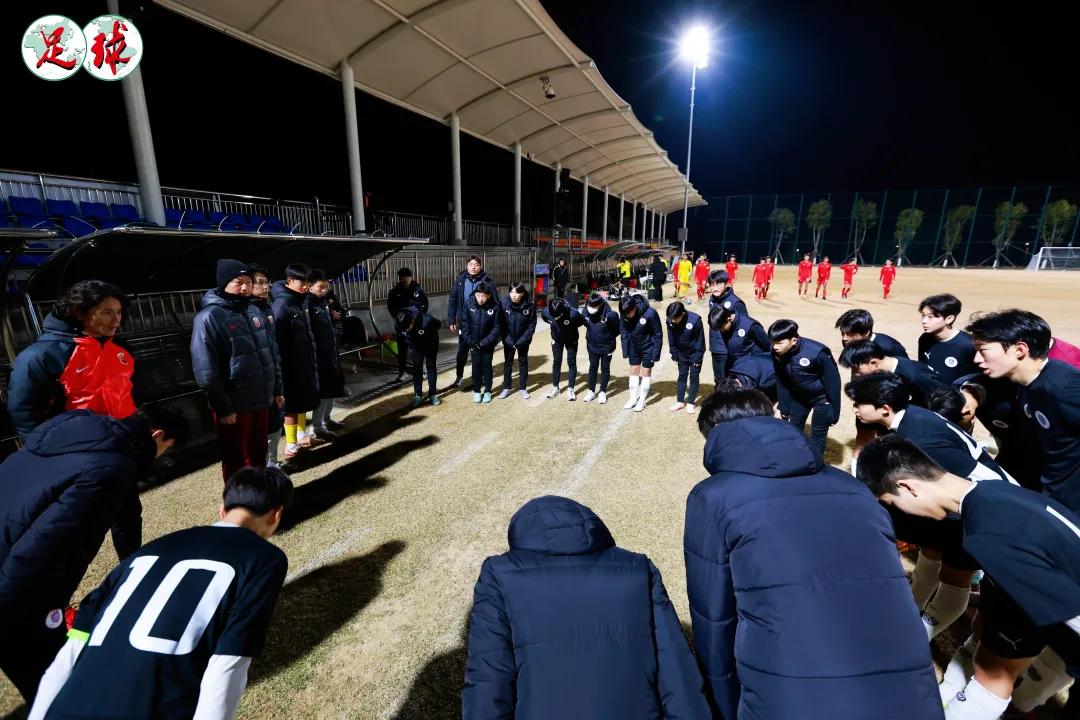
Incheon United’s players, unfamiliar with Chinese cuisine, relied on seaweed brought from Korea to eat with plain rice for meals. Although aware of their discomfort in a foreign environment, Incheon’s assistant coach reminded the team after each meal that coming to another country requires respecting local culture, including food. Since they are guests, they should first appreciate the hospitality and then adapt. If adaptation proves impossible, they can raise concerns to find solutions. Overcoming difficulties and focusing on training and matches is the main message emphasized by Incheon’s coaching staff.
This team includes two players who have been selected for Korean national youth teams: number 24 Kim Ha-lam and number 14 Liu Can-yong, both left-footed. The former was the key player with one assist and one goal on the first match day, leading the team to victory over Xi’an Sports School, while the latter tried three different positions during the game.
With overall strength advantage, Incheon United always seemed a step ahead during matches. “It felt like they were always around me,” said a Xi’an Sports School player after the game. “No matter how we tried to advance, they were always one step quicker.” However, Xi’an showed no fear. After conceding a goal due to a defensive error, number 35 Hu Tongxuan capitalized on an opponent’s mistake by intercepting the ball near the front and scoring a stunning 25-meter left-footed shot. “After intercepting, their center-back dropped back, fearing I’d get past him one-on-one. I didn’t think much, just focused on shooting,” Hu said. Although his goal couldn’t prevent defeat, the team’s performance earned Incheon’s respect.
In the opening match, Dingnan Dream was evenly matched with Seongnam until conceding a goal in the final moments of the first half. “The first half was back and forth, but after conceding that goal, our mindset collapsed a bit,” said Dingnan Dream’s head coach Wu Jiahao.
This is a familiar pattern. Many times, domestic teams can hold their own against opponents for a period, but in the end, the losing side is often ours.
“Football cultivates mental toughness,” said Yongin representative Yoon Seok-jun. In fact, Korean teams also grit their teeth, as shown when HSFA Hwaseong was once seriously challenged by Zhejiang, and Yongin only equalized against Shanghai Port at the last moment.
At the U15 age group, the gap between Chinese and Korean teams is not too wide. As Zhejiang team leader Xiong Wei said, “If domestic teams could play more matches like this, Chinese kids’ level would definitely improve. We always advocate gaining more exposure, experiencing different styles and diverse players. Only then can they accumulate more experience.”
Seongnam head coach Zhao Dongxi stated that Chinese football is on the rise, and as long as it finds a style that suits itself and sticks to it, “it will surely awaken from its slumber.”


Wonderfulshortvideo
The footwork, the finish 🤌


The Wirtz x Sané link-up 🔗
Class personified.
yamal getting better raphinha goals today raphinha vs osasuna yamal barcelona highlights yamal pass today
Griezmann with the cool finish 🥶
“afcon funny moments”
🤤🤤
 Links
Links
 Contact
Address:UNIT 1804 SOUTH BANK TOWER, 55 UPPER GROUND,LONDON ENGLAND SE1 9E
Number:+85259695367
E-mali:icecmxtdaf@gmail.com
 App
App


