



The first-ever China-Korea Youth Challenge: 48 hours in Dingnan, the only non-professional Korean youth team



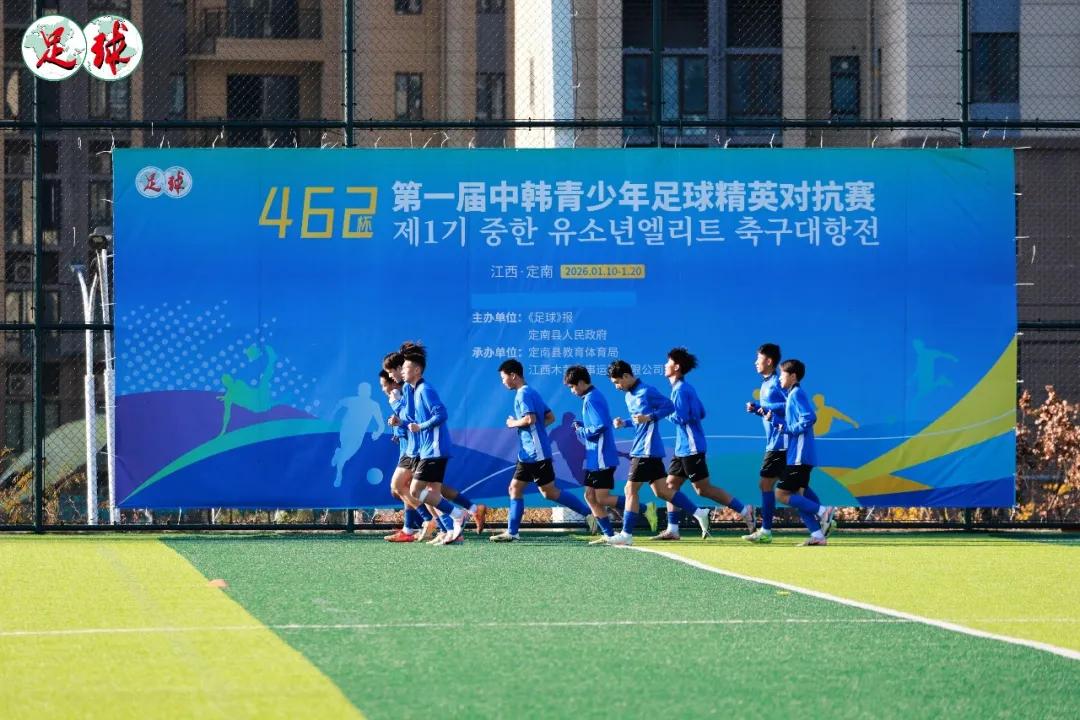
From Nannan reporting in Dingnan, Jiangxi On the evening of January 10, the bus carrying Guizhou Football Association’s U15 team arrived at the Jiangxi Dingnan (National) Youth Football Training Center, parking slowly before Building 7. This was the final Chinese squad to reach the competition area for the first "462 Cup" China-Korea Youth Football Elite Challenge (referred to as the China-Korea Challenge). While the Guizhou youths were organizing their luggage outside the bus, the earliest arriving Korean HSFA Hwaseong players were already lined up neatly, heading toward Building 2 where the dining hall is located.
HSFA Hwaseong was the first team to arrive at the competition zone for this China-Korea Challenge; they reached on January 8, nearly 24 hours earlier than the first domestic team, Henan. Head coach Choi Seong-ju led the players setting off early at around 5 a.m. on the 8th, flying from Incheon Airport to Guangzhou Baiyun Airport, then taking a bus to the venue. By the time the team had dinner, it was close to 9 p.m., and many players showed signs of fatigue stepping off the bus. For many, this nearly 16-hour journey was their first experience of such length.
After arranging rest for the players, Choi Seong-ju submitted two requests to the organizing committee: to use the gym at 10 a.m. the next day and to hold a practice match in the afternoon. Receiving positive responses, Choi finally rested assured. This team is far from ordinary; they belong to Hwaseong Football Association under the Gyeonggi-do Football Association and were runners-up in the U14 age group at the 2025 Gyeonggi-do Autumn Football Tournament, having been tested through Korea’s youth competition system.
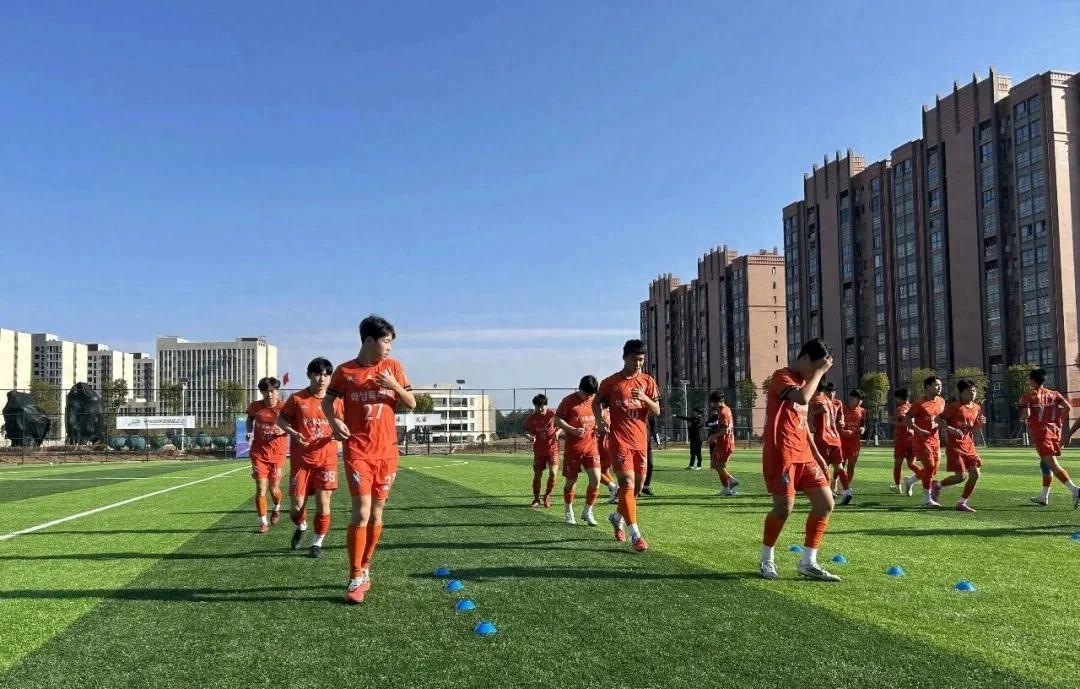
At 9:30 a.m. the following day, led by two assistant coaches, 21 Hwaseong players gathered outside the gym at the main stadium of the training center. After a brief speech from Choi Seong-ju, the team began a light warm-up. Compared to the fatigue seen the previous day, the Hwaseong players looked much more energized, training with great focus, some even showing a fierce determination in their eyes. If the warm-up outside the gym was just to activate muscles, the workout inside was clearly carefully planned: lunging jumps, plank knee raises, weighted sit-ups, resisted sprints, box jumps in place, and a 2-minute plank. The entire Hwaseong squad split into six groups, simultaneously performing different exercises, rotating through five cycles in total.
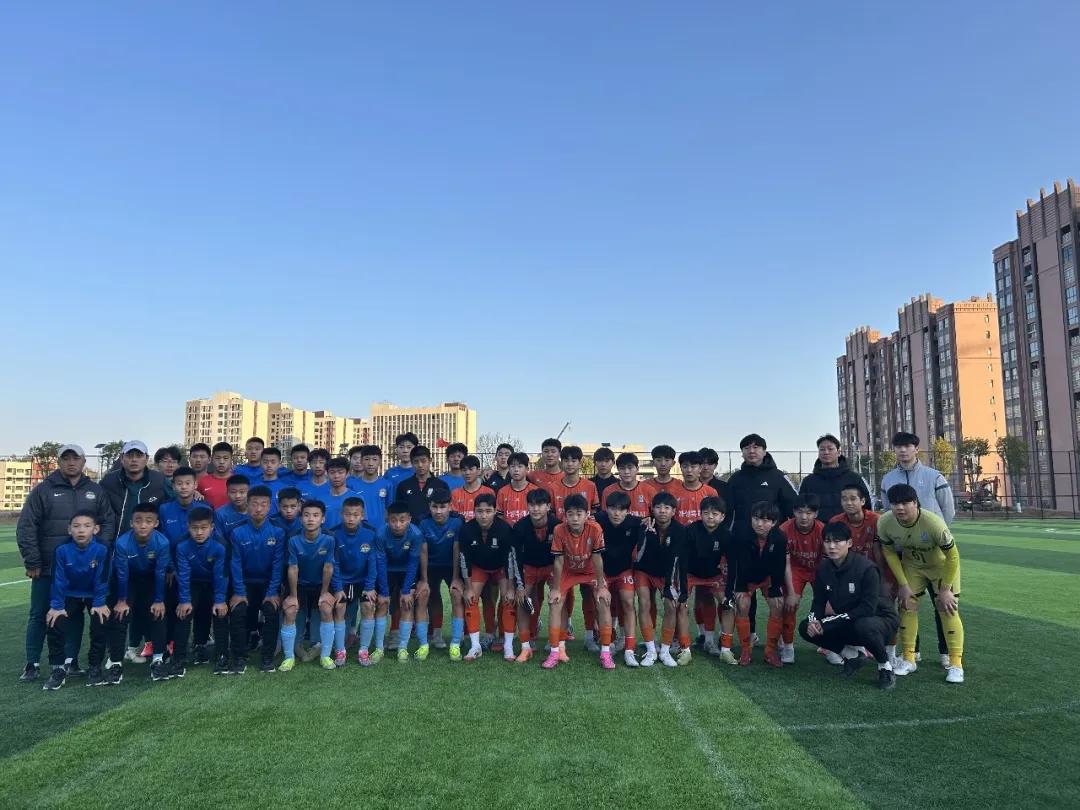
Judging by their training state, this likely represents Hwaseong’s regular routine. If the morning gym session was a low-intensity warm-up, the afternoon’s practice match saw a significant increase in intensity. The host county Dingnan arranged for Hwaseong to face the U16 champions from the recent Ganzhou "New Long March" Cup. Since the opponents were a year older and had just returned from competition, Dingnan fielded mostly rotation players. The match consisted of three 30-minute periods. Within the first minute of the first period, Hwaseong broke through on the right flank to score. Although Dingnan quickly equalized following a goalkeeper error, Hwaseong still led at the end of the first period. In the following two periods, Hwaseong gradually extended their advantage and won comfortably. This marked a full first day for Hwaseong in Dingnan with one training and one match.
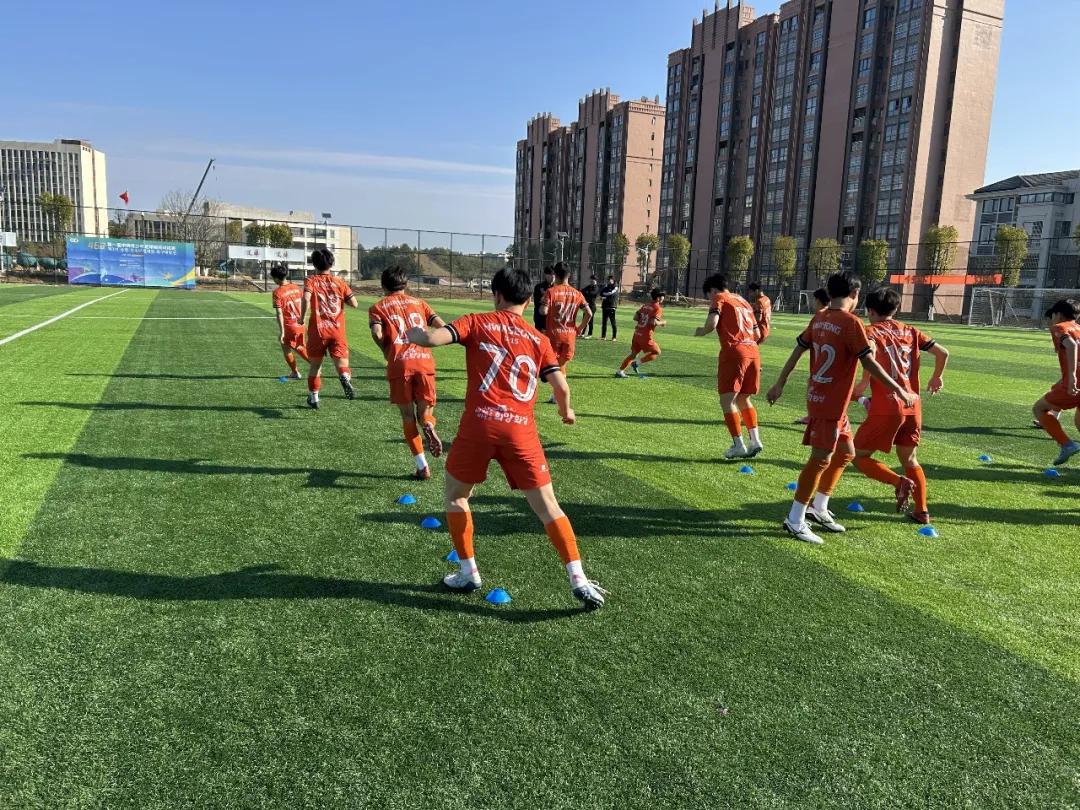
January 10 was the arrival day for most teams, but Hwaseong’s schedule consisted of only four activities: eating, resting, training, and competing. By 10 a.m., the team was already assembled on the training ground. After the gym session and practice match the day before, Hwaseong’s third day of training in China noticeably increased in volume. Anaerobic drills such as sprints were added to off-ball training, and physical confrontations were introduced in ball drills. Although the training lasted only about 70 minutes, nearly every player was breathing heavily by the end.
At 3:30 p.m., another practice match took place against Henan, who had arrived on the 9th. This time, Hwaseong deployed the traditional Korean high press, temporarily adopting a 2-4-4 formation. Under such high-intensity pressure, the newly arrived Henan team struggled to organize effective attacks and quickly conceded goals, resulting in an unsurprising outcome.
After dinner, Hwaseong received the training schedule for the morning of the 11th. Head coach Choi Seong-ju immediately began planning the training, intending to increase intensity despite having the first China-Korea Challenge match against the traditionally strong Chinese youth team Zhejiang FC that evening. Choi said, “Coming to China, we want to play as many matches as possible. If needed, two matches a day is fine; in Korea, we often play two games a day.”
Among the four Korean teams in this China-Korea Challenge, Hwaseong is the only non-professional youth squad. Their pre-arrival preparations—arriving two days early and limiting daily activities to just four tasks while progressively increasing training intensity—might surprise many Chinese youth coaches. Hwaseong may not be Korea’s top youth team, but their dedication to training intensity and emphasis on learning through competition vividly reflect the rigor of Korean youth development. Over the next 10 days, through 32 China-Korea matches and close interactions on and off the field, we will have more opportunities to observe Hwaseong and the other three Korean youth teams—the story of the first China-Korea Youth Challenge has only just begun.


Wonderfulshortvideo
The footwork, the finish 🤌


The Wirtz x Sané link-up 🔗
Class personified.
yamal getting better raphinha goals today raphinha vs osasuna yamal barcelona highlights yamal pass today
Griezmann with the cool finish 🥶
“afcon funny moments”
🤤🤤
 Links
Links
 Contact
Address:UNIT 1804 SOUTH BANK TOWER, 55 UPPER GROUND,LONDON ENGLAND SE1 9E
Number:+85259695367
E-mali:icecmxtdaf@gmail.com
 App
App


