



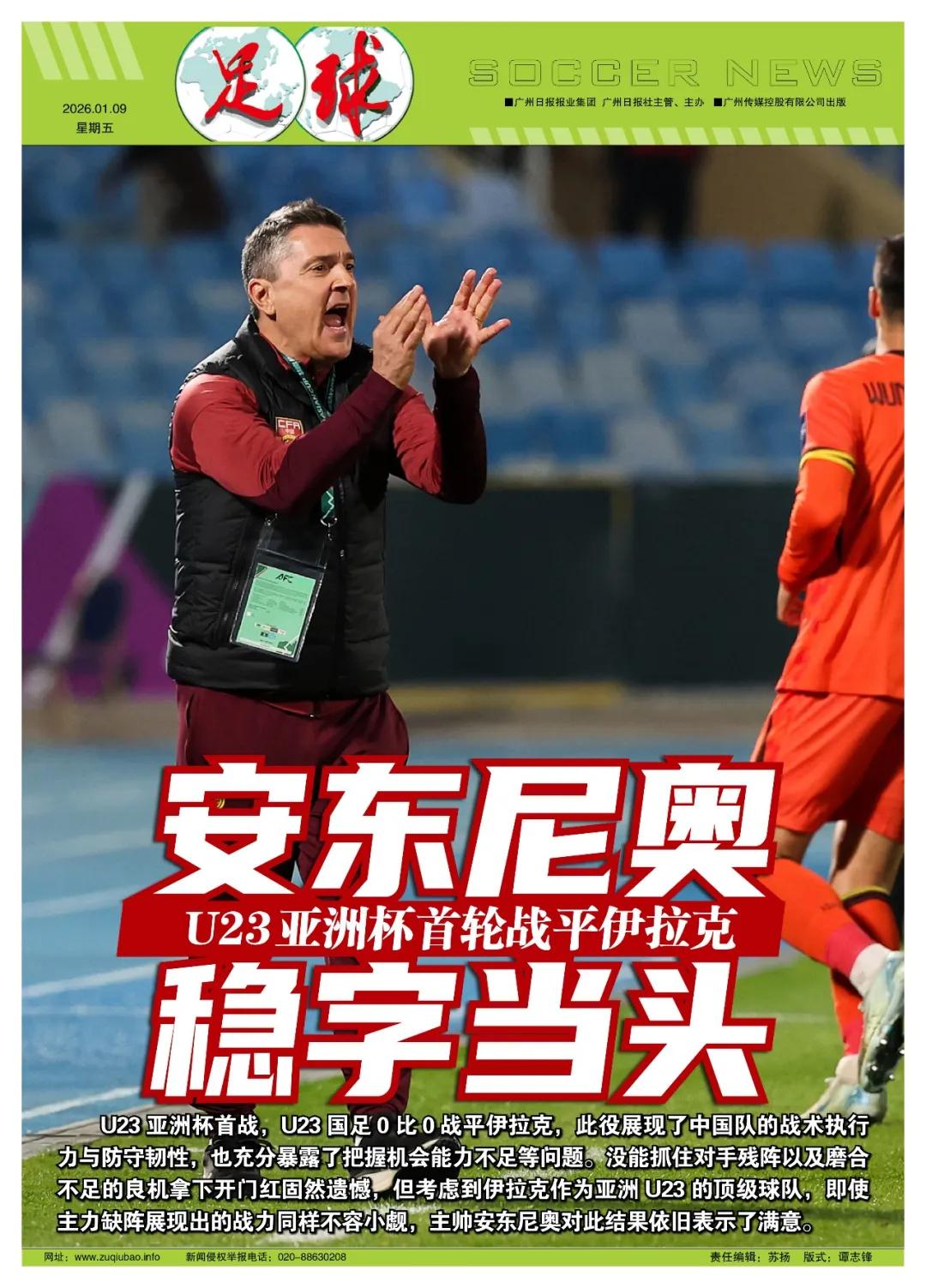
U23 Asian Cup opening round ends in a draw, Antonio prioritizes stability


Reporter Lu Mi reports In the Group D opener of the U23 Asian Cup, China’s U23 men’s team played against last edition’s third-place Iraq, who were missing multiple starters. Despite Baoshimeng’s early injury substitution in the first half, China managed to generate several threats through tight defense and quick counters but could not convert. The second half saw a shift in momentum, and in the closing moments, goalkeeper Li Hao made several crucial saves to secure a 0-0 draw.
This match showcased China’s tactical discipline and defensive resilience, while also highlighting their shortcomings in finishing chances. Although it was disappointing not to seize the opportunity to win against a weakened and less coordinated opponent, considering Iraq’s status as a top Asian U23 team, their competitive level even without key players remains formidable. Coach Antonio expressed satisfaction with the result.

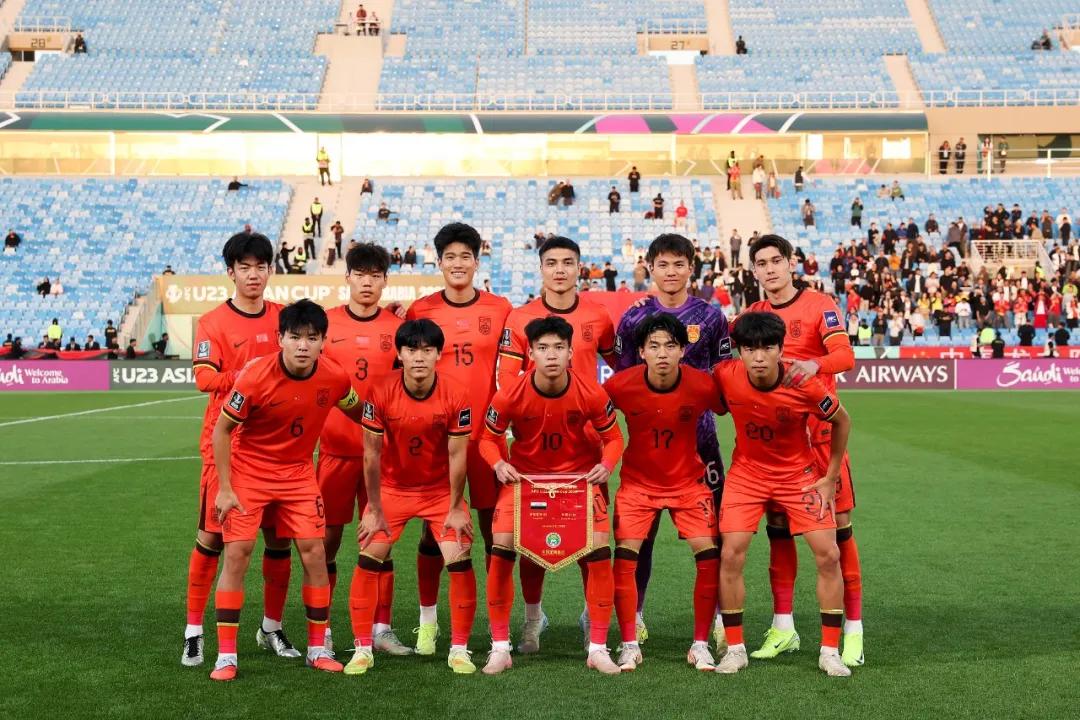
Unlike the official 4-4-2 starting lineup announced by China, Antonio deployed a 5-3-2 defensive counterattack formation. He Ran, Wumitijiang, and Peng Xiao formed the three center-backs, Xu Bin took over the captain’s armband from Liu Haofan to lead the midfield, while Wang Yudong and Bai Helamu started upfront. Players like Kuai Jiwen and Xiang Yuwang were on the bench. Iraq entered the match with only 20 players due to unresolved lineup issues, and their starting goalkeeper Sajid was a late addition.
Within three minutes, Baoshimeng was injured after being challenged during a cross from the flank and had to leave the field in the 9th minute, with Yang Xi stepping in as a substitute under pressure. China then gradually found their rhythm, frequently threatening on counterattacks. At the 20th minute, Wang Yudong made a run down the left and crossed, but Wang Bohao's header narrowly missed the post; at the 24th minute, Li Zhenquan delivered a clever cut-back from the baseline, and Yang Xi, unmarked near the six-yard box, half-turned to shoot but mishit the ball, missing the best scoring chance of the first half.
First-half stats showed Iraq dominating possession with 59.9%, an 82.6% passing accuracy, and four shots (two on target). China controlled only 40.1% possession but managed six shots through counterattacks. Neither side took the first game lightly; after adjusting to the pace, China created opportunities. Iraq, despite poor preparation, gradually improved as the half progressed, using their superior fitness and overall strength to press China more aggressively.
In the second half, China pushed their defensive line forward slightly and created early danger. Wang Yudong broke through on the left and crossed, but Bai Helamu and Yang Xi failed to capitalize on the two-point attack inside the box. Later, Wumitijiang received a yellow card for a foul, somewhat limiting the wing-back’s offensive support.
At the 54th minute, Yang Xi intercepted and quickly passed to the far post, where Wang Yudong followed up with a low shot, but Iraq’s substitute goalkeeper Sajid reacted swiftly to block it. Iraq then asserted their overall dominance, increasing pressure on China’s U23 team and gaining territorial control. In response, Antonio brought on Yang Haoyu and Chen Zeshi for the exhausted midfielders Wang Bohao and Li Zhenquan, aiming to stabilize the midfield.
As the match progressed, China’s defense and midfield lost coordination, allowing Iraq several dangerous scoring opportunities. Offensive substitutions were delayed until the 88th minute when Kuai Jiwen and Xiang Yuwang entered, replacing the drained Bai Helamu and Wang Yudong. However, their primary role was to help resist Iraq’s intense attacks.
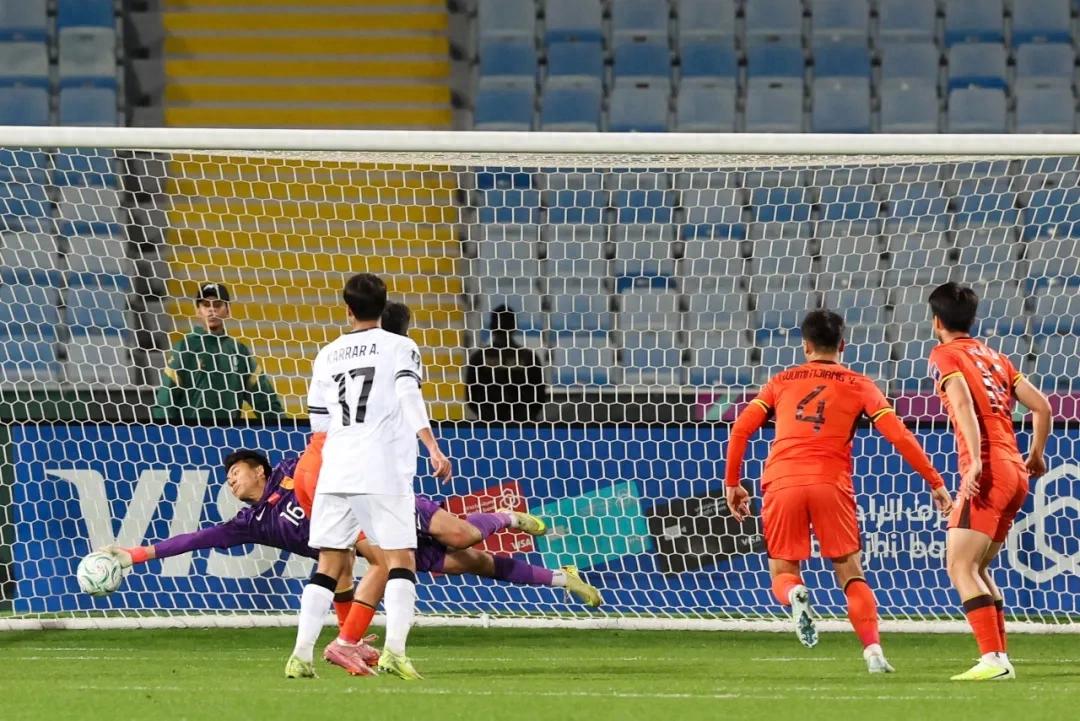
At a critical moment, goalkeeper Li Hao stood out as China’s best player, delivering a series of spectacular saves to preserve the draw. Notably, he leapt to deny Ayman Louai’s header in the 87th minute and blocked a close-range shot at the 90th minute, preventing defeat and securing a vital point under pressure. After the match, Antonio praised his protégé highly, saying, “He has been with me since he was 14. I know him completely. His mental strength is absolutely at the top goalkeeper level.”

Although China missed the chance to win against a depleted opponent, managing a clean sheet against a top-tier U23 team like Iraq still left coach Antonio satisfied. “You have to consider China’s position in Asian football and compare it with Iraq’s standing. Facing such a team head-on today, I’m very pleased with our performance. We had chances to win — there were opportunities. Even though we didn’t get the victory, this is exactly how we progress.”
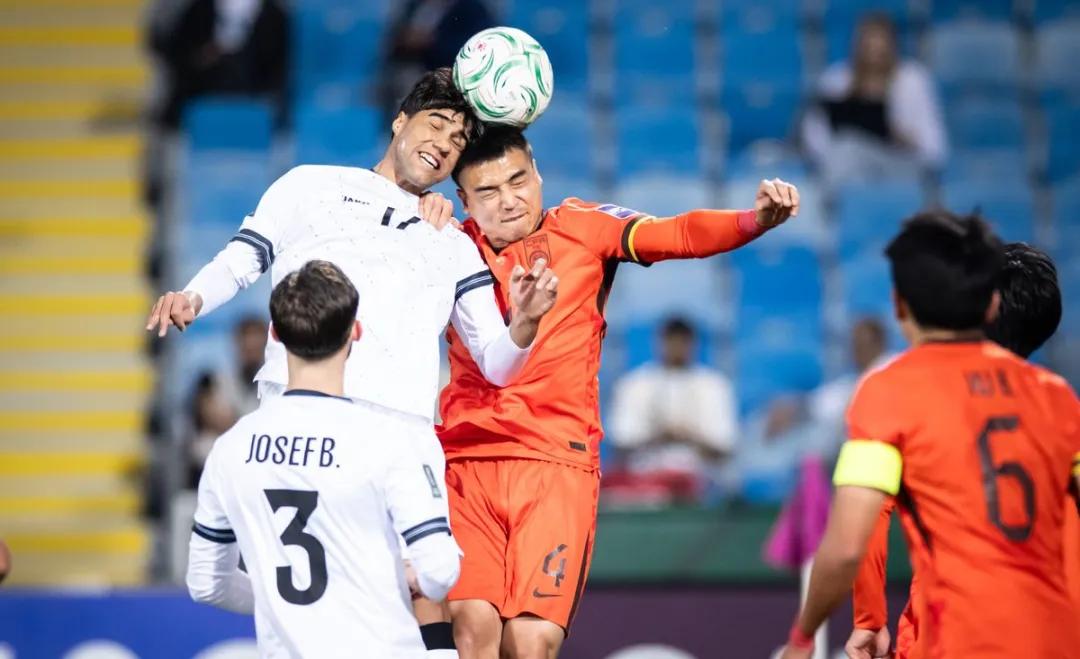
The brightest spot in China’s attack was naturally their highest-valued player Wang Yudong, whose link-up play with Bai Helamu and multiple connections with Yang Xi created several threatening chances. Defensively, the team maintained good cohesion and cooperation; He Ran, Wumitijiang, and Peng Xiao worked well together to timely cover and intercept Iraq’s aerial balls and wing advances. Antonio particularly highlighted Peng Xiao’s performance: “He had some issues in training two days ago but was eager to play and worked hard to recover for today’s match. I think he played excellently and showed high-level skills.”
However, the team’s weaknesses were also apparent. The main issue was a lack of finishing ability. China had numerous excellent scoring chances, but whether it was Yang Xi’s missed close-range shot or Wang Yudong’s several threatening attempts, none were converted, indicating room for improvement in technical precision and mental composure during critical moments.
Secondly, midfield control remained insufficient. In the latter stages, under intense pressure from the opponent, China’s midfield made more passing errors and struggled to dictate the game’s tempo, forcing the team into a defensive posture.
Most players on this U23 team have rich experience in the Chinese Super League and China League One. Judging from the match, the contradiction of creating chances but failing to score is not just about skill deficiency but also a lack of experience in major competitions. Given the scarcity of high-quality matches in domestic youth development, these practical issues can only be corrected and improved through more real, high-stakes games. At this stage, any U-series national team gaining extra matches in official tournaments is essentially gaining valuable experience.
Although Bai Helamu stated in a post-match mixed interview that “the team’s goal remains to strive for first place in the group,” it is clear that every opponent in this group is formidable for China’s U23 team. After the first round, Australia leads Group D with a 2-1 win over Thailand, holding 3 points and a +1 goal difference; China and Iraq both drew 0-0, each with 1 point and zero goal difference, placing second and third respectively; Thailand is fourth. Despite finishing last, Thailand scored first and put significant pressure on Australia even when reduced to ten men, demonstrating that competitiveness in the U23 Asian Cup cannot be judged by senior national team rankings alone.


Wonderfulshortvideo
Class personified.


chelsea 3-3 leeds united 4-1 wolves
yamal getting better raphinha goals today raphinha vs osasuna yamal barcelona highlights yamal pass today
marc bernal highlights bernal barcelona vs frankfurt yamal goal today yamal highlights today lewandowski goal ferran goal raphinha goal barcelona champions league
jamie carragher salah interview monday night football carragher mnf salah press conference salah benched slot interview slot press conference
Griezmann with the cool finish 🥶
kounde goals today yamal assist today rashford assist today barcelona 2-1 frankfurt
 Links
Links
 Contact
Address:UNIT 1804 SOUTH BANK TOWER, 55 UPPER GROUND,LONDON ENGLAND SE1 9E
Number:+85259695367
E-mali:icecmxtdaf@gmail.com
 App
App


