



Chelsea's turmoil is the fault of American ownership.



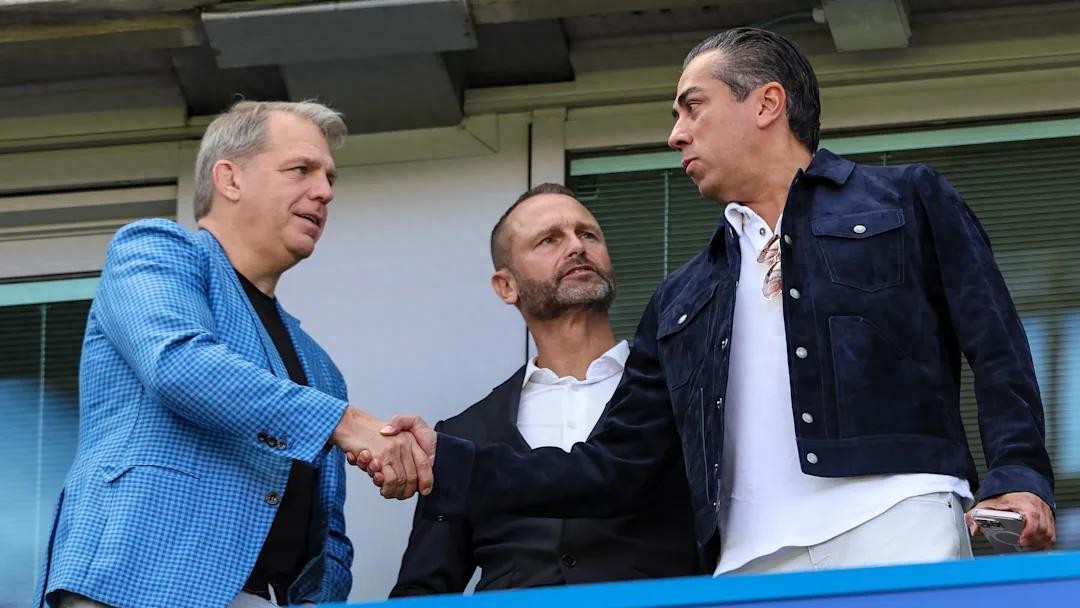
Written by Han Bing Maresca and Chelsea's American management clashed and dismissed each other. Although the Italian coach has problems, it is clear to media and fans alike that the American executives who transformed the club into a "newcomer supermarket" are to blame. The majority shareholder, owner of Clearlake Capital, Egbarie, along with five directors, not only control player transfers entirely but also command the medical team, which answers to management rather than the coach. Moreover, these executives even interfere with the head coach’s decisions on player selection.
Maresca paid the price for his stubbornness and emotional nature, but what about the American executives? After the Italian coach was dismissed, protests by Chelsea fan groups and their six demands clearly reveal the severe strategic crisis caused by American management. Chelsea is no longer a top-tier powerhouse but a "newcomer supermarket," with management focusing on bringing in young players in bulk to sell for profit, sacrificing the club’s crucial championship competitiveness.
Furthermore, even in their profit-driven approach, Chelsea's management has internal conflicts. Disagreements between Boley, who originally led operations, and major shareholder Egbarie have caused disruptions in player transfers, commercial development, and even stadium expansion projects. Over time, Chelsea struggles not only to attract top coaches but also to maintain consistent competitiveness on the field. The American profit-first strategy is pushing Chelsea into an irreversible downward spiral.
The peculiar "executive club"
English Premier League clubs have varied management models. Eddie Howe at Newcastle and Emery at Aston Villa have full authority over their teams, while Manchester City, Arsenal, and Liverpool operate through mutual respect between head coaches and sporting directors. However, American-owned Chelsea uniquely operates as an "executive club" in the Premier League. There are as many as five directors with various titles: sporting directors Winstanley and Stewart, talent development director Hills, global recruitment director Jewell, and chief football development director Farros, who only took office in November last year. Additionally, the medical team head Roberts, who caused Maresca’s loss of control, reports solely to management since his appointment in summer 2024 from Bournemouth.
The executives, omnipresent, bear greater responsibility for Chelsea’s current state. Iranian-American billionaire Egbarie, co-founder of majority shareholder Clearlake Capital, is hands-on at nearly every home game, leading directors from the Stamford Bridge box to the home team’s locker room after matches. This is rare in the Premier League, and it’s hard to imagine coaches and players having to wait for executives’ collective visits after every home game.
Chelsea’s large "executive team" fulfilled some of Maresca’s transfer requests. The Italian wanted wide wingers, so they signed Gana Cho and Neto; he needed a striker, so they brought in Draper. But in many cases, requests were denied—for example, after Corvil was injured, no new center-back was signed, leaving only young Achampong available.
The end result is an influx of inexperienced newcomers joining the squad, while last season’s newly integrated players have departed. The first team’s rapid player turnover makes it difficult for coaches to leave a lasting impression, essentially starting anew each season. Fans struggle to form attachments to the revolving door of players, and the players themselves find it hard to develop a sense of belonging.
According to La Gazzetta dello Sport, Maresca’s authority has been continuously undermined; he lacks decision-making power over transfers, and player availability is determined by the medical team. After every match, he must explain tactics and substitutions to a group of executives entering the locker room. By the end of last year, some agents even demanded more playing time for their clients. For a coach who relies heavily on rotation like Maresca, it’s clear who pulls the strings behind the scenes. On December 30, Maresca missed the post-match press conference, and soon all disagreements with management were leaked to the media. Naturally, the Italian coach knows who the "mole" is.
The increase in Chelsea’s executive numbers has clearly caused confusion in the club’s power structure and development direction. This chaos has not eased but worsened in the new season, ultimately forcing Maresca to resign.
The "newcomer supermarket" focuses solely on profit
After Maresca’s departure, a fan group named "Chelsea is not a project" publicly protested and planned demonstrations before Chelsea’s home match against Brentford. The group posted an open letter on social media, bluntly accusing American ownership of turning Chelsea into a "newcomer supermarket" prioritizing profit from potential players, causing the team to lose its championship competitiveness. Over three seasons, Chelsea has changed three official coaches; Maresca at least managed to win trophies based on core players in form. Yet the club continues long-term investment policies this season, ultimately leading to performance decline and coaching departures.
The fan group’s six demands directly target the core issues of American Chelsea’s operational strategy: unclear responsibilities, executive interference in the team, prioritizing quantity over quality in transfers, overcrowded management, and lack of championship goals. They emphasize that when the initial "rebuilding plan" started, fans tolerated the drop in performance. But now, in its fourth season, Chelsea’s strategy still prioritizes market profits over winning trophies, deviating from the fundamental goal of a top club.
This summer alone, Chelsea saw changes involving 27 players. With half a year left in the transfer window, four players under 22 have already been pre-signed, costing over €70 million. Among the 17 departures, Madueke (€21 million), Vega (€14.5 million), Petrovic (€12.9 million), Chukwumeka (€4.4 million), and Ugochukwu (€1.7 million) were all signed and sold for profit during the American era, totaling €54.5 million in gains. Additionally, four zero-cost academy players, led by Broja, generated €46.4 million in profits. Due to the Premier League’s anti-amortization policy targeting Chelsea, the American strategy of mass signing long contracts to spread costs is now fully restricted. This has caused Chelsea’s transfer market investment to decrease annually, while player sales revenue must rise to meet Financial Fair Play requirements. The American model, successful in North American sports for bulk player acquisition, has hit a ceiling in the Premier League. Unsurprisingly, this summer will again be a window for large-scale player sales to cash in. Under these circumstances, expecting American-owned Chelsea to maintain championship competitiveness is unrealistic.
Moreover, the reckless spending in the first four seasons has created natural obstacles for subsequent coaches. Maresca’s experience serves as a harsh warning to other potential Chelsea managers. Without a mature, stable team and a coaching staff in control, today’s Stamford Bridge is merely a short-term investment hub for young players. Coaches aiming to win titles here like Mourinho, Ancelotti, or Conte must proceed with extreme caution.


Wonderfulshortvideo
Class personified.


chelsea 3-3 leeds united 4-1 wolves
yamal getting better raphinha goals today raphinha vs osasuna yamal barcelona highlights yamal pass today
marc bernal highlights bernal barcelona vs frankfurt yamal goal today yamal highlights today lewandowski goal ferran goal raphinha goal barcelona champions league
jamie carragher salah interview monday night football carragher mnf salah press conference salah benched slot interview slot press conference
Griezmann with the cool finish 🥶
kounde goals today yamal assist today rashford assist today barcelona 2-1 frankfurt
 Links
Links
 Contact
Address:UNIT 1804 SOUTH BANK TOWER, 55 UPPER GROUND,LONDON ENGLAND SE1 9E
Number:+85259695367
E-mali:icecmxtdaf@gmail.com
 App
App


