



China Football Year-End Summary: 2025, The “Year of Comprehensive Advancement” in the National Football Strategy




Reported by Chen Yong The new round of Chinese football reforms that began in early 2022 went through incubation, research, and phased implementation from 2022 to 2024, alongside anti-corruption and anti-gambling campaigns. In 2025, it reached a comprehensive national-level strategic deployment and overall advancement, including the most significant football policy documents and the highest-level national football work conference.
Accompanied by a series of strategic arrangements and overall promotion, Chinese football welcomed a fresh historic opportunity in 2025:
At the national team level, youth squads improved, especially the U20 team, which was just one step away from the World Cup. After experiencing the lowest point of three consecutive youth and junior teams missing the AFC Asian Cup finals, China’s national teams at various levels have begun to recover, though this progress has yet to manifest in the senior national team.
The youth competition system was further refined and improved, forming four major competition frameworks based on professional club youth teams, school football, social youth training institutions, and sports system youth training: the China Youth League, sports system youth competitions (member association championships, three major ball games, and National Games), top-level youth leagues, as well as local and national school football competitions. Moreover, more leagues adopted home-and-away formats.
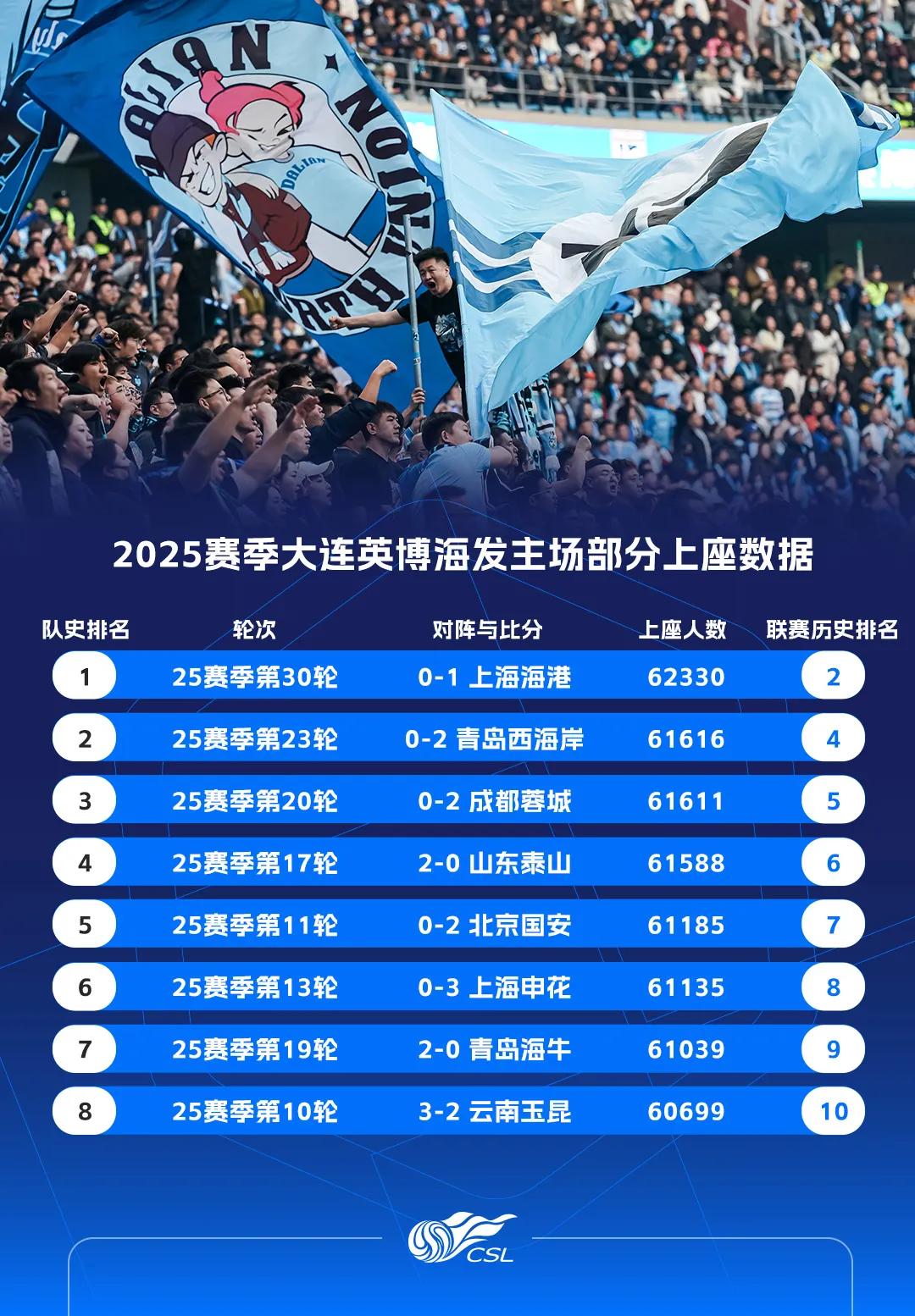
The professional leagues experienced a full-scale boom, with the Chinese Super League’s attendance surpassing 6 million for the first time, a 32.54% increase over the previous year. The professional leagues have stabilized after a low point marked by mass club withdrawals, and local governments are showing increasing attention to professional football.
City leagues, organized by administrative divisions, emerged strongly. The China Football Foundation expanded county-level grassroots football competitions to cover one-third of the country’s counties. This bottom-up grassroots enthusiasm combined with top-down national strategic deployment created a dual-driven momentum.
The year 2025 marks the overall advancement of China’s football strategic deployment and represents a historic opportunity for Chinese football. Starting in 2026, implementation will become the core focus, requiring further optimization of various football development paths, especially the competition systems, including more stable development of city leagues. Decision-making accounts for 10%, while 90% depends on implementation; 2025 is merely the starting point for the revitalization and development of Chinese football.
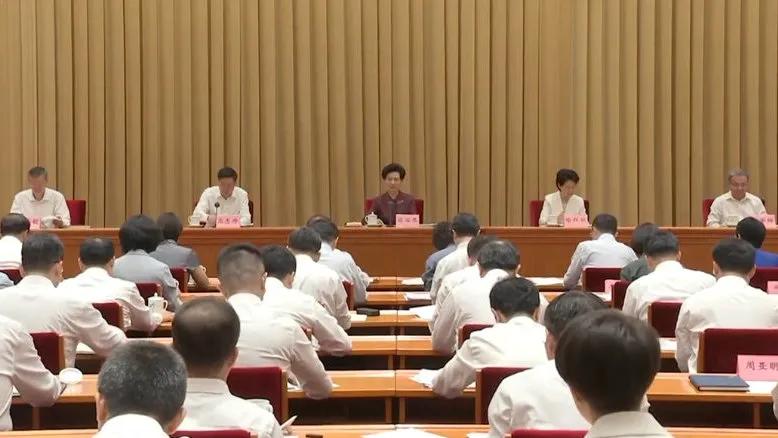

This round of football reform in China began in 2022, highlighted by key events: early in the year, the first batch of key football development cities was announced, with the final list of 16 cities published in 2023; in July, the China Youth Football League was launched; by year-end, a new wave of anti-corruption in Chinese football began, followed by comprehensive anti-gambling efforts.
In 2023, the three-tier professional league fully returned to the home-and-away format, and the professional leagues began to stabilize. Subsequently, a nationwide football survey was conducted at the national level, integrating development suggestions for Chinese football. By year-end, pilot programs for football youth training systems integrating sports and education were established in eight western cities.
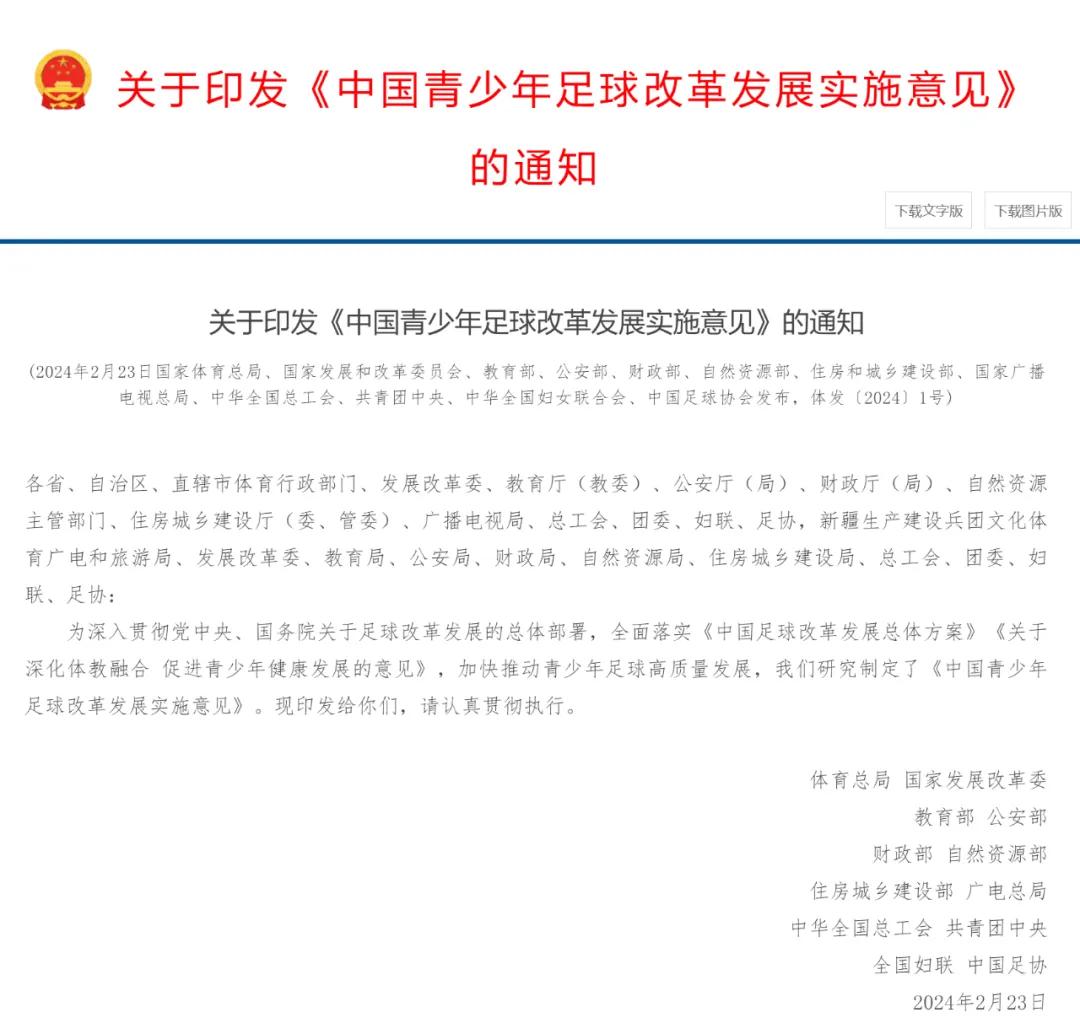
In February 2024, the “Implementation Opinions on the Reform and Development of Chinese Youth Football” were issued; in March, the Ministry of Education announced the 2023 undergraduate program approvals, officially including football as an undergraduate major, with the first 30 universities approved; in June, State Councilor Chen Yiqin emphasized during a Shanghai inspection the importance of innovative breakthroughs in key football cities and persistent efforts to advance football reform and development; on December 16, the State Council executive meeting studied and promoted football revitalization work, highlighting football revival as a key task in building a strong sports nation and calling for intensified policy implementation to continuously elevate football development.
From 2022 to 2024, efforts focused on individual tasks such as the China Youth League, key football cities, western youth training pilots, university football majors, and anti-corruption and anti-gambling campaigns. Entering 2025, these points and lines have been connected to form a national-level strategic deployment with higher standards and greater intensity.
(1) At the beginning of 2025, a major national football policy document was released, comprehensively planning the direction and path for the development of Chinese football at the highest level. This marked another milestone since the 2015 “Overall Plan for Chinese Football Reform and Development.”
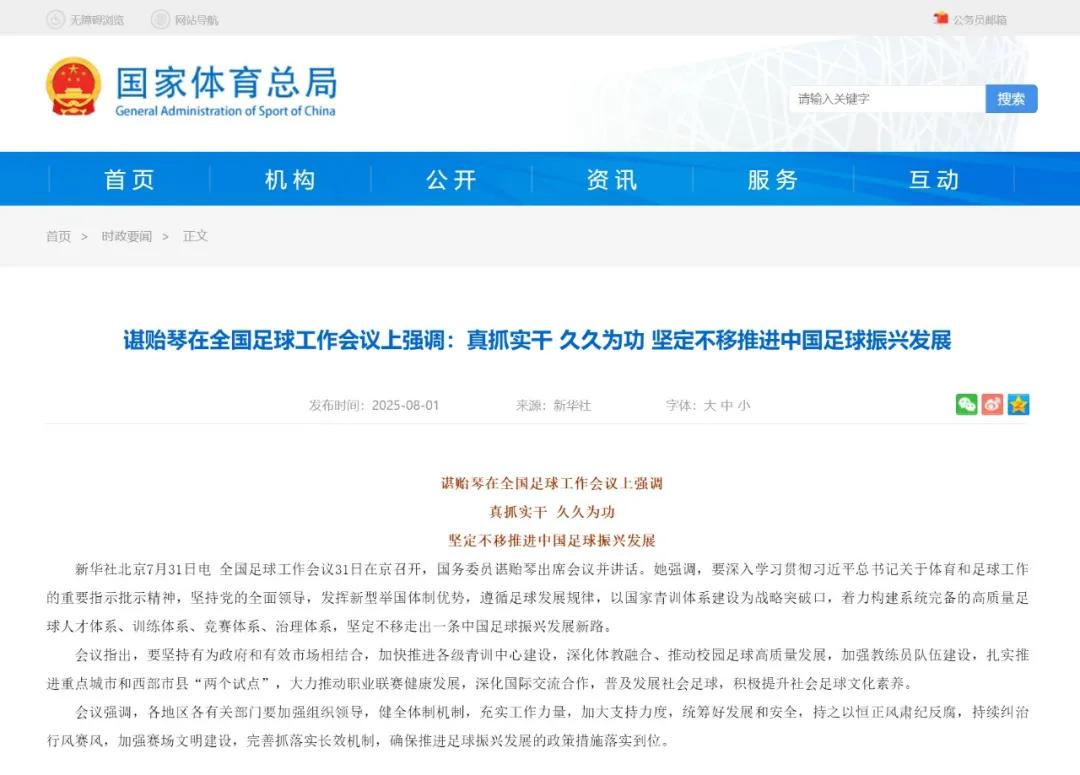
(2) Another milestone was the National Football Work Conference held on July 31, the highest-level football meeting in over 30 years in China. Its core points included: first, adhering to the Party’s overall leadership and leveraging the advantages of the new national system; second, using the construction of the national youth training system as a strategic breakthrough; third, combining an effective market with proactive government intervention. Other focuses were youth training center construction at all levels, promoting healthy development of professional leagues, and persistent efforts to uphold discipline and fight corruption. The conference set clear principles and ideas, precise directions and paths, and most importantly, united nationwide efforts, stimulated local enthusiasm, and comprehensively advanced Chinese football revitalization. Following the conference, on August 19, a meeting to promote the youth training center system was held in Wuhan, a core task for Chinese youth football focusing on elite youth training. By year-end, China’s youth football overseas programs and international exchanges were fully launched.
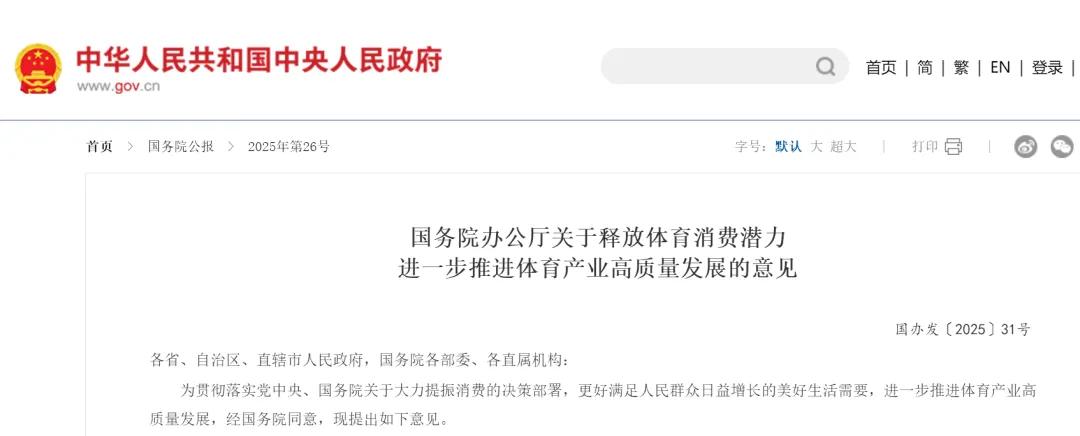
(3) Sports consumption, including football consumption, became a key focus. On August 22, 2025, Premier Li Qiang chaired a State Council executive meeting to study ways to unleash sports consumption potential and further promote high-quality development of the sports industry. On September 4, the General Office of the State Council issued “Opinions on Unleashing Sports Consumption Potential and Further Promoting High-Quality Development of the Sports Industry.” This policy relates to the new pattern of China’s social and economic development and focuses on one of the fundamental logics of Chinese football revitalization: only by fully unleashing football consumption and achieving high-quality development of the football industry can Chinese football secure its most fundamental foundation — the economic base.

As a series of football policies and strategic deployments gradually unfold, the future focus will be on implementation. Based on implementation, adhering to the principle that “practice is the sole criterion for testing truth,” in-depth summaries, reviews, and optimizations of policies across various football fields will be conducted.
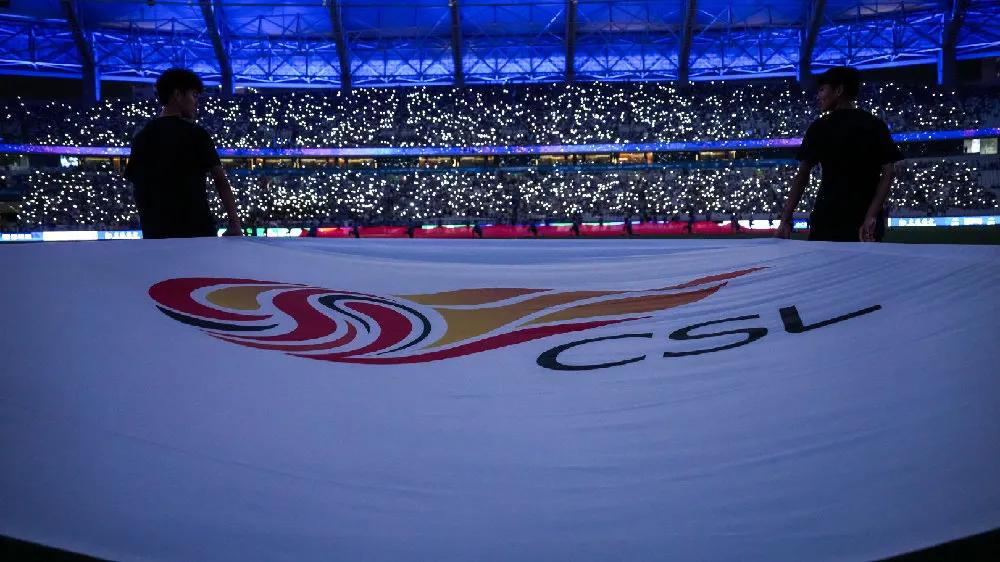
At the implementation level, following the national football work conference, the passion for football across regions has surged: taking youth football as an example, most places emphasize building youth training centers and elite teams; in professional leagues, many provinces and cities actively support professional football, with several planning to establish professional football clubs; in city leagues, no fewer than 10 provinces and cities held city leagues in 2025, with about 20 expected in 2026.
Key implementation points include: first, avoiding superficial implementation and focusing on substance and detail. For example, youth football work must ultimately concentrate on talent development, and football competitions should not be held merely for the sake of playing but should truly support youth growth and foster football atmosphere and culture through high-quality competition systems. Second, avoid focusing only on city leagues while neglecting professional football, or focusing solely on sports system youth football while downplaying professional youth teams, school football, and social youth training clubs. In other words, especially economically developed provinces and cities must coordinate all efforts without neglecting any aspect.
Other areas requiring review and optimization include:
(1) In the overall philosophy, it is essential to fully recognize that football is a competitive sport but not only that; it is also a driver of consumption and industrial upgrading. Football development should be approached comprehensively from economic, cultural, and governance perspectives. In other words, grasping the three cores of economy, culture, and governance is key to achieving the true revitalization and development of Chinese football.
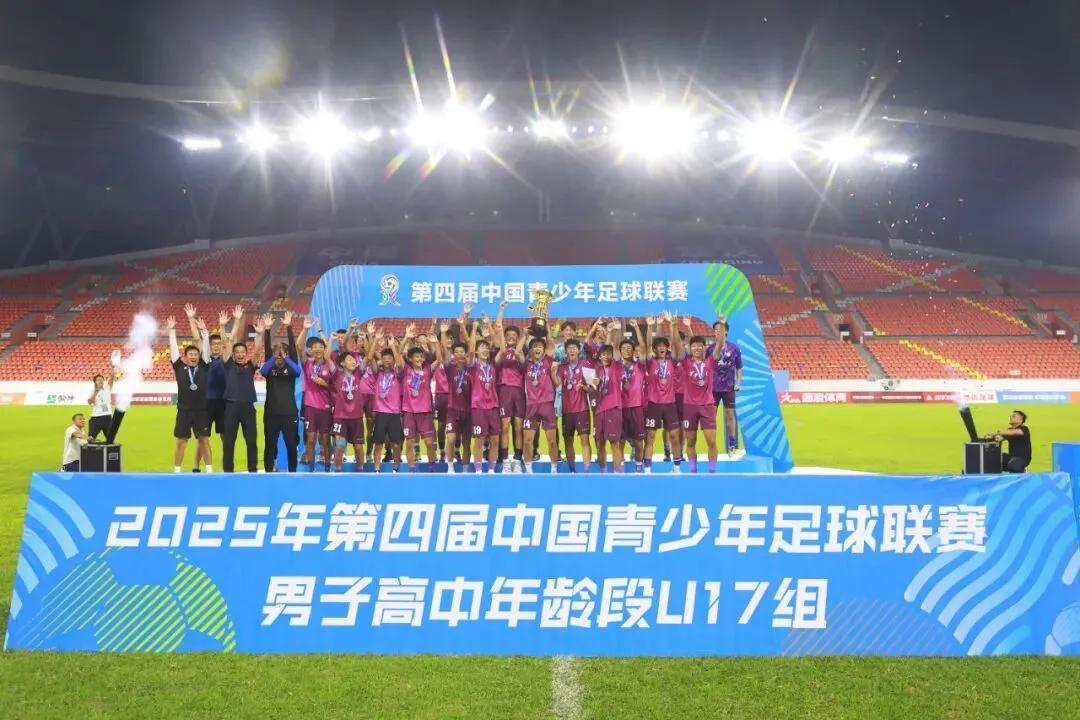
(2) In youth football, attention should be paid to several “corners”: first, with the improvement of the national three-ball games system, provincial and municipal levels should also organize corresponding annual three-ball games, with clear age group arrangements across national, provincial, and city levels—for example, national three-ball games for U18 and U16, provincial for U14 and U12, and cities focusing on primary and secondary school football development, progressively promoting youth competitions in batches; second, currently, professional club youth competitions only have the U20 league, but maintaining the U17 league is recommended since professional youth training is the main global model focusing on young players; third, there is a lack of U14 age group competitions in various categories, and given the rapid changes in adolescent players even within six months, research on national U14 competitions is suggested.
(3) In professional football, the Chinese Football Association must firmly establish a business-centered work philosophy, avoid excessive adjustments at the competitive level, and focus fully on enhancing the brand value and commercial revenue of Chinese professional leagues, laying the most solid foundation for their stable development.
(4) City leagues should be allowed to develop freely but must be constantly monitored and studied to ensure their stability and sustained popularity. Meanwhile, local governments should continue to build amateur club competition systems, establishing a pyramid of at least eight levels of Chinese club leagues: professional (Chinese Super League, League One, League Two), semi-professional (Chinese Champions League finals, regional leagues), and amateur (at least 2 to 3 levels of provincial and municipal amateur club leagues). This is also the main model of world football development and must not be neglected.
The national level’s emphasis on football has filled everyone with confidence about the future of Chinese football, but for true revitalization and development, football practitioners across all fields must take responsibility, collaborate, and work pragmatically to firmly root and realize the strategic deployments.


Wonderfulshortvideo
Class personified.


chelsea 3-3 leeds united 4-1 wolves
yamal getting better raphinha goals today raphinha vs osasuna yamal barcelona highlights yamal pass today
marc bernal highlights bernal barcelona vs frankfurt yamal goal today yamal highlights today lewandowski goal ferran goal raphinha goal barcelona champions league
jamie carragher salah interview monday night football carragher mnf salah press conference salah benched slot interview slot press conference
Griezmann with the cool finish 🥶
kounde goals today yamal assist today rashford assist today barcelona 2-1 frankfurt
 Links
Links
 Contact
Address:UNIT 1804 SOUTH BANK TOWER, 55 UPPER GROUND,LONDON ENGLAND SE1 9E
Number:+85259695367
E-mali:icecmxtdaf@gmail.com
 App
App


