



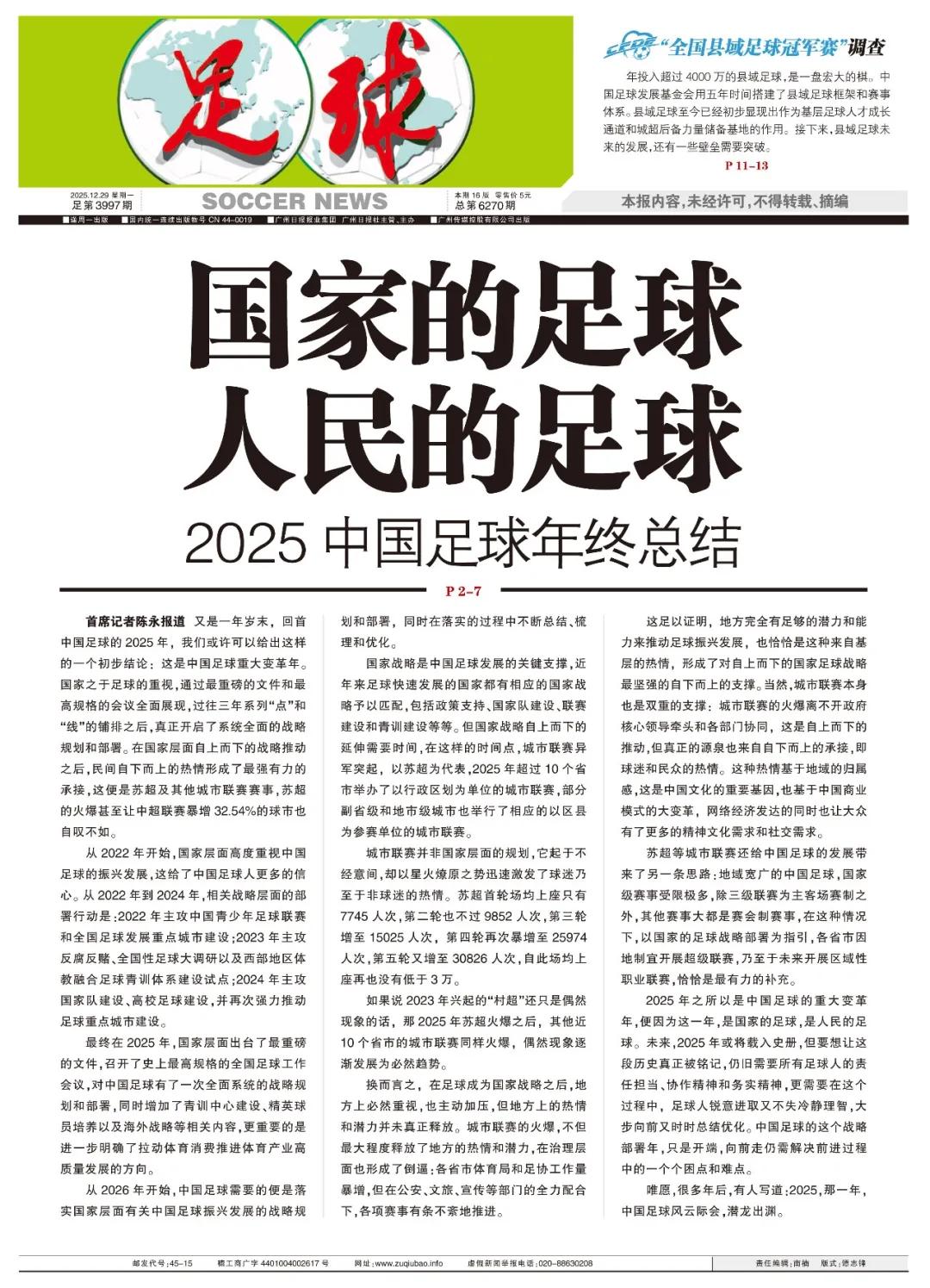
2025 China Football Year-End Review: Football of the Nation, Football of the People



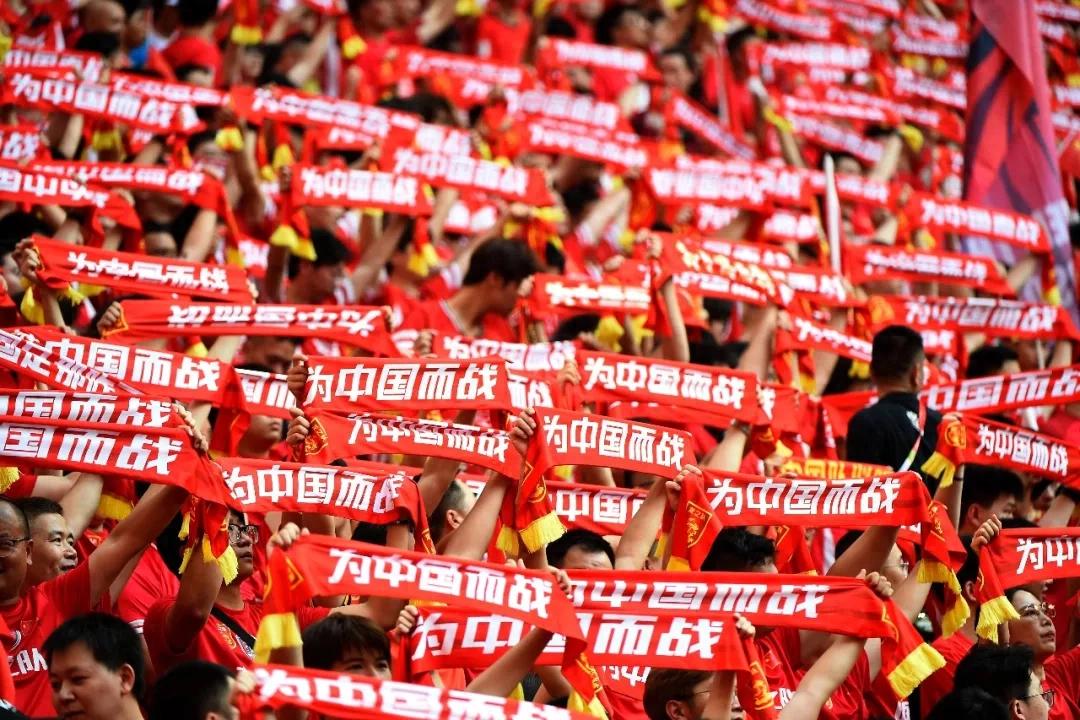
Chief reporter Chen Yong reports As another year draws to a close, reflecting on Chinese football in 2025, we can tentatively say this is a year of profound change. The country’s focus on football has been showcased through the most important documents and top-tier conferences. Following three years of building “points” and “lines,” a full-scale strategic planning and execution have been launched. With a top-down national strategy driving progress, grassroots enthusiasm has formed a powerful counterpart, exemplified by the Super League and other city leagues. The Super League’s popularity even outshone the Chinese Super League, whose fan market grew by 32.54%, making it pale in comparison.
Since 2022, the national government has placed great importance on revitalizing Chinese football, boosting confidence among football practitioners. From 2022 to 2024, strategic actions included: in 2022, focusing on youth football leagues and developing key football cities nationwide; in 2023, targeting anti-corruption and anti-gambling efforts, conducting a nationwide football survey, and piloting football youth training systems integrating sports and education in western regions; in 2024, emphasizing national team building, college football development, and further promoting key football cities.
Ultimately, in 2025, the government issued the most significant policy documents and held the highest-level national football work conference ever, providing a comprehensive and systematic strategic plan for Chinese football. Additionally, it expanded focus on youth training centers, elite player development, and overseas strategies. More importantly, it clarified the direction to boost sports consumption and promote high-quality growth of the sports industry.
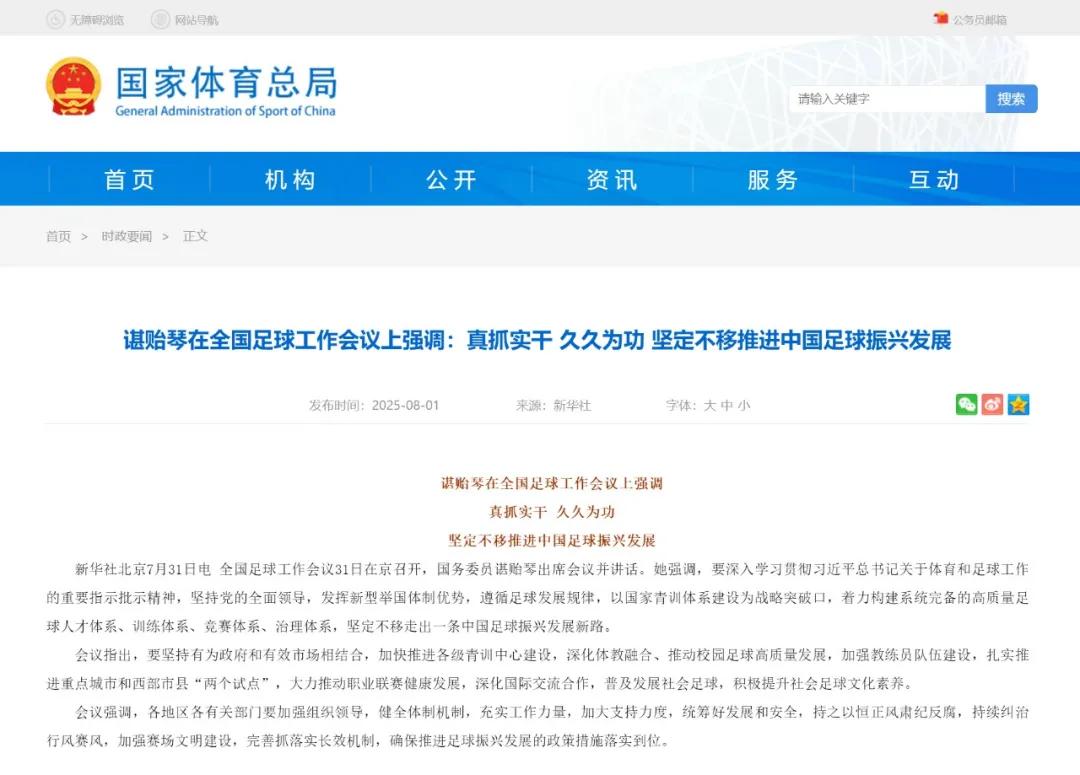
Starting from 2026, Chinese football must implement the national strategic plans for football revitalization, continuously summarizing, reviewing, and optimizing during the process.
National strategy is the key foundation for Chinese football’s development. Countries with rapidly advancing football programs in recent years have corresponding national strategies, including policy support, national team building, league development, and youth training. However, such top-down strategies take time to extend fully. At this juncture, city leagues have emerged strongly, led by the Super League. In 2025, more than ten provinces and cities hosted city leagues based on administrative divisions, while some sub-provincial and prefecture-level cities held leagues organized by districts and counties.
City leagues are not part of national planning; they started unintentionally but quickly ignited enthusiasm among fans and even non-fans like wildfire. The Super League’s average attendance rose from 7,745 in the first round to 9,852 in the second, then 15,025 in the third, surged again to 25,974 in the fourth, and increased to 30,826 in the fifth round. Since then, average attendance has never dropped below 30,000.
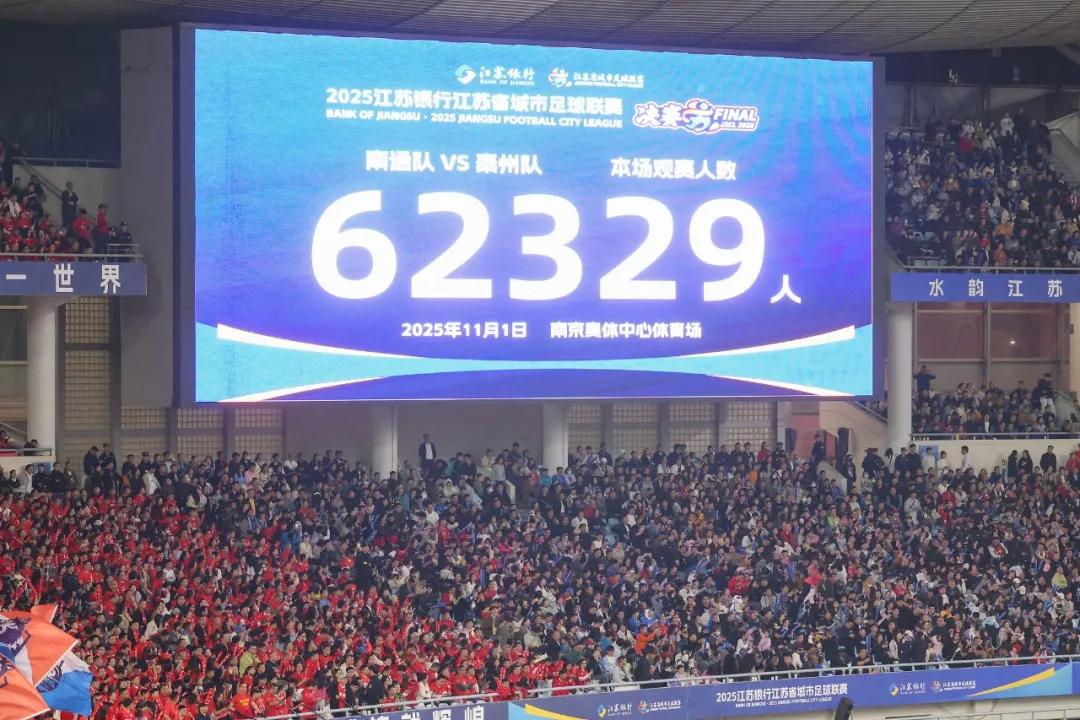
If the “Village Super League” that emerged in 2023 was still a coincidence, then following the Super League boom in 2025, the city leagues in nearly ten other provinces and cities also flourished, turning coincidence into an inevitable trend.
In other words, after football became a national strategy, local governments naturally attached importance and actively pushed forward, yet local enthusiasm and potential had not been fully unleashed. The popularity of city leagues not only maximized local passion and potential but also created pressure on governance: provincial and municipal sports bureaus and football associations faced a surge in workload, yet with full cooperation from public security, culture and tourism, and publicity departments, all events proceeded smoothly and orderly.
This fully demonstrates that localities have ample potential and capability to promote football revitalization. It is precisely this grassroots enthusiasm that forms the strongest bottom-up support for the top-down national football strategy. Of course, city leagues themselves provide dual support: their success relies on government leadership and cross-departmental coordination, a top-down push, but the true source lies in the grassroots acceptance driven by fans’ and the public’s passion. This passion is rooted in regional belonging, an essential element of Chinese culture, and also reflects the major transformation of China’s commercial model, where a thriving internet economy has increased the public’s spiritual, cultural, and social needs.
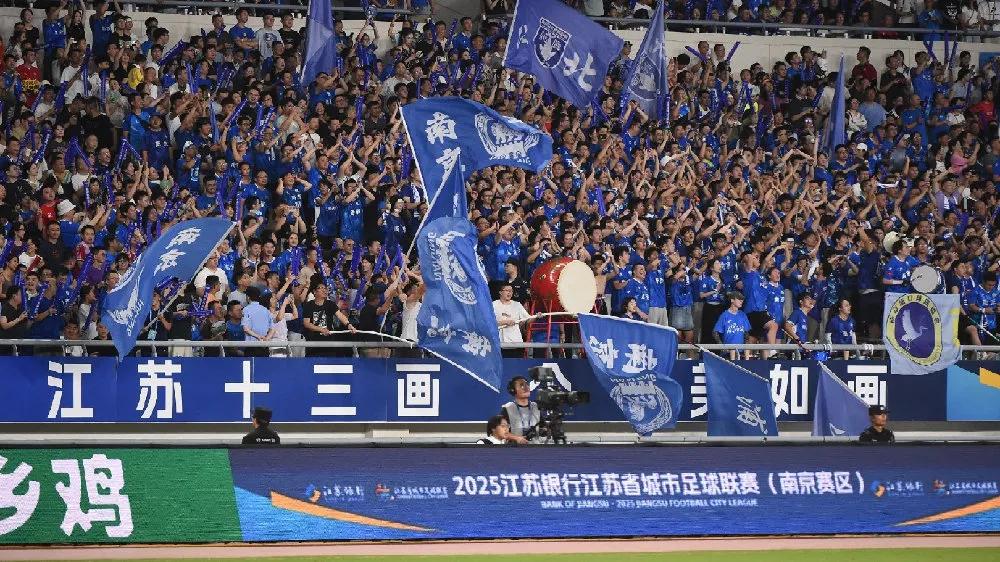
City leagues like the Super League have also offered a new approach for Chinese football’s development: given China’s vast geography and the many restrictions on national-level competitions—most being tournament-style except for the three-tier leagues with home-and-away formats—guided by national football strategy, provinces and cities can tailor their own super leagues or even regional professional leagues in the future, which serve as the most effective supplement.
The reason 2025 is a landmark year for Chinese football is that it represents football of the nation and football of the people. While 2025 may be recorded in history, truly commemorating this era requires all football stakeholders to take responsibility, collaborate, and act pragmatically. It also demands that football people advance boldly while remaining calm and rational, moving forward while continuously reviewing and optimizing. This strategic year for Chinese football is only the beginning; moving forward still requires overcoming various challenges and difficulties along the way.
It is hoped that many years from now, someone will write: In 2025, Chinese football experienced a momentous convergence, with the hidden dragon emerging from the depths.


Wonderfulshortvideo
Class personified.


chelsea 3-3 leeds united 4-1 wolves
yamal getting better raphinha goals today raphinha vs osasuna yamal barcelona highlights yamal pass today
marc bernal highlights bernal barcelona vs frankfurt yamal goal today yamal highlights today lewandowski goal ferran goal raphinha goal barcelona champions league
jamie carragher salah interview monday night football carragher mnf salah press conference salah benched slot interview slot press conference
Griezmann with the cool finish 🥶
kounde goals today yamal assist today rashford assist today barcelona 2-1 frankfurt
 Links
Links
 Contact
Address:UNIT 1804 SOUTH BANK TOWER, 55 UPPER GROUND,LONDON ENGLAND SE1 9E
Number:+85259695367
E-mali:icecmxtdaf@gmail.com
 App
App


