



Vietnam Shooting Team Successfully Achieves Targets at SEA Games 33



At SEA Games 33, the Vietnamese shooting squad exploded onto the scene by securing 14 medals in total: 8 gold, 5 silver, and 1 bronze, along with establishing 4 new SEA Games records.
At SEA Games 33, the Vietnamese shooting team made a remarkable impression, not only by leading the medal tally in this sport but also through the professional value and long-term strategic significance of their achievements.
By the end of the Games, Vietnamese shooters had collected a total of 14 medals—8 gold, 5 silver, and 1 bronze—while breaking 4 SEA Games records. This accomplishment far exceeded the initial target of 7 gold medals, making the shooting team one of the most successful squads for Vietnam at this edition. Compared to regional rivals, Vietnam’s dominance was clear: Indonesia followed with 5 golds, Malaysia earned 4 golds, and although the Philippines won medals, they did not secure any gold.
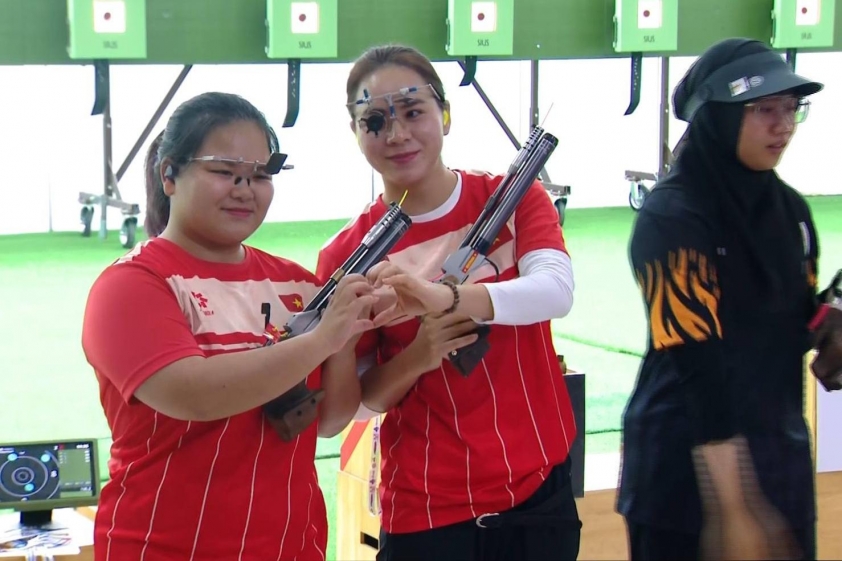
Notably, Vietnam’s superiority in shooting did not come from a single event. Gold medals were spread across multiple key categories, ranging from pistol to rifle, individual to team events, and including both men’s and women’s competitions. Victories in team events such as the women’s 10m air pistol, women’s 25m pistol, men’s 50m rifle three positions, and men’s 25m rapid fire pistol demonstrate the team’s depth and consistent strength—crucial factors for Olympic sports that demand precision and mental toughness.
Within this overall success, Trịnh Thu Vinh stood out as the most prominent figure. Born in 2000, she had a spectacular performance by winning 4 gold medals in both individual and team categories, breaking multiple SEA Games records. Beyond her impressive results, Thu Vinh showed top-level skill and strong competitive composure, proven in major arenas such as the 2024 Paris Olympics. SEA Games 33 thus solidified her status as a regional leader and raised expectations for her future at continental and global competitions.
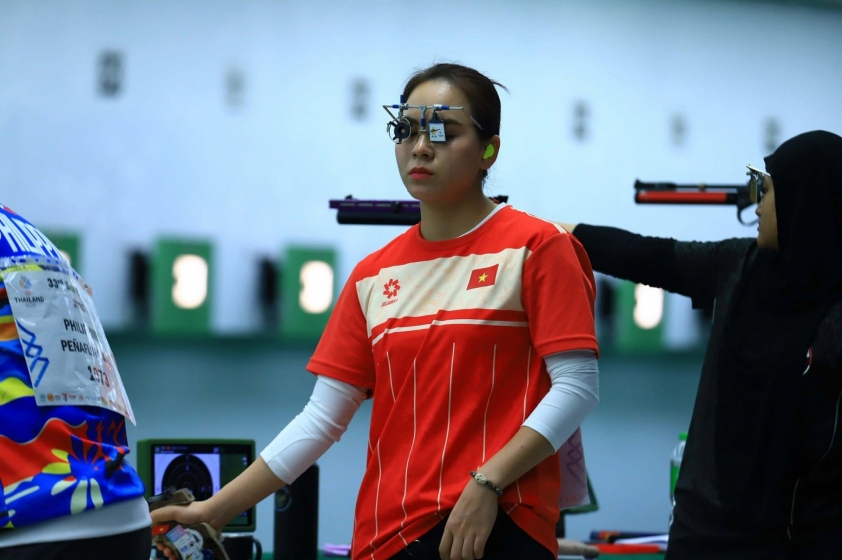
However, the greatest value of this success lies beyond the medal count. As Southeast Asian countries increasingly invest in shooting with many athletes reaching international standards, Vietnam’s maintained advantage reflects the clear effectiveness of a well-planned, long-term preparation strategy. The SEA Games serve as an important testing ground where the team both competes for results and evaluates their squad, gains experience, and hones competitive resilience.
Behind these medals is a focused investment strategy in shooting over recent years. Identifying it as a key Olympic sport has ensured priority in facilities, equipment, training plans, and coaching staff. Starting early in 2025, shooters gathered for concentrated training, participated in suitable international competitions, and emphasized both technical skills and psychological readiness. Simultaneously, a youth renewal process balanced experienced athletes with promising young talents, ensuring continuity for future Games cycles.
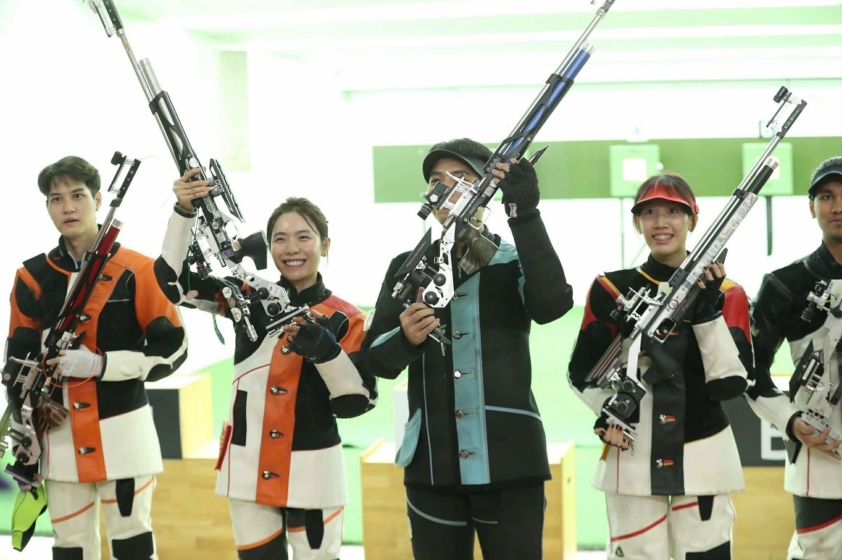
Another positive sign is that most of Vietnam’s gold medals at SEA Games 33 came from Olympic program events. This indicates a development focus not only for regional success but also for tougher competitions like the ASIAD and Olympics, where skill level and pressure tolerance are paramount.
SEA Games 33 has concluded, but for Vietnamese shooting, it is not an endpoint but a significant milestone on a longer journey. With athletes at their peak and a growing next generation, shooting is expected to remain a sport capable of breakthroughs for Vietnam on the continental and world stage. This success not only boosts morale but also confirms the right direction of a long-term investment strategy that prioritizes quality and sustainable effectiveness as the foundation for greater future ambitions.



Wonderfulshortvideo
The footwork, the finish 🤌


The Wirtz x Sané link-up 🔗
Class personified.
Which counterattack is
Griezmann with the cool finish 🥶
“afcon funny moments”
🤤🤤
 Links
Links
 Contact
Address:UNIT 1804 SOUTH BANK TOWER, 55 UPPER GROUND,LONDON ENGLAND SE1 9E
Number:+85259695367
E-mali:icecmxtdaf@gmail.com
 App
App


