



World Cup Draw: A Global Contest


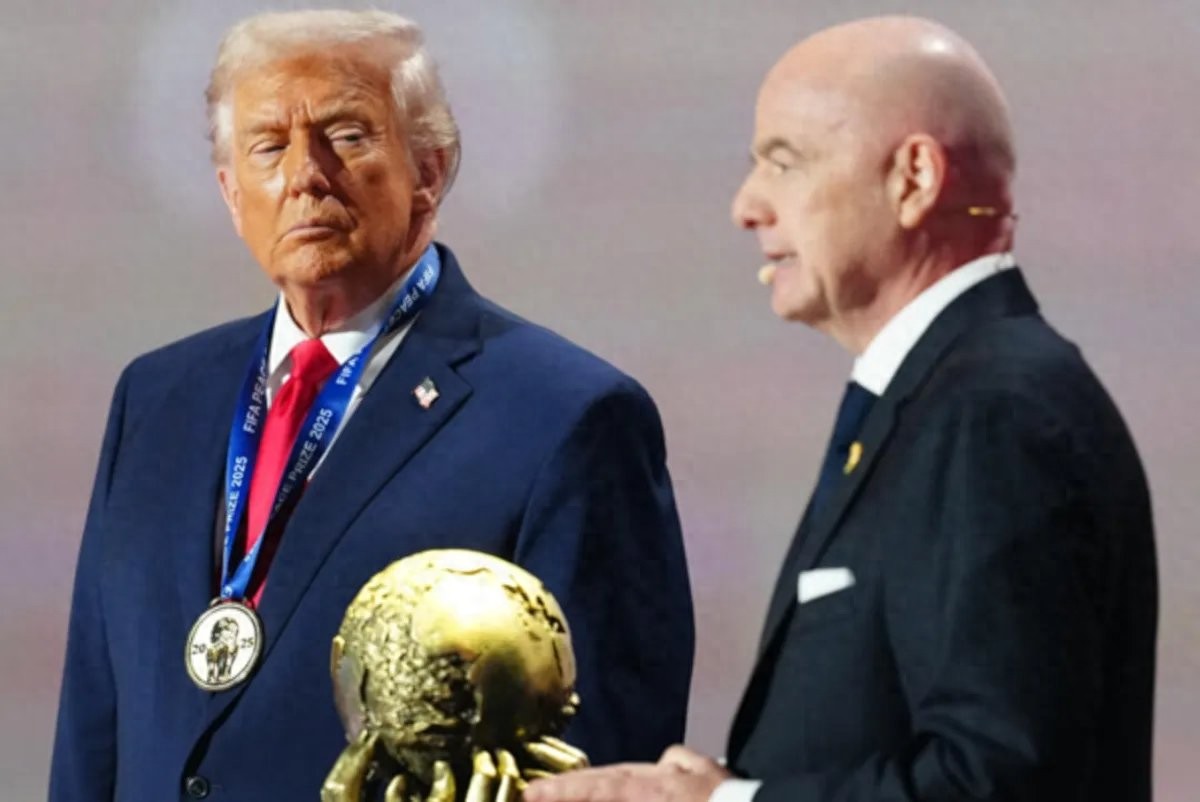
Written by Han Bing With an unprecedented 48 teams participating, this World Cup deserves an equally grand draw ceremony. On December 5th at the Kennedy Center in Washington, the 2026 World Cup draw was indeed historically “magnificent”: an 87-minute wait filled with American sports entertainment, live performances, and impromptu interviews; legendary figures from the major American sports leagues conducting the draw; and the host nation’s president tirelessly asserting his well-known presence...
The World Cup draw ceremony is the perfect moment to showcase football’s unpredictable appeal, the best vision before the reality of competition sets in, and a declaration of the globalization propelled by the tournament’s expansion. However, everything became less clear due to Trump’s appearance. This American leader, championing “anti-globalization” and “America First,” forcibly stole the spotlight from this historic draw. Considering Trump’s actions over the past year opposing globalization, the expanded World Cup draw lost much of its universal joy and harmony.
Infantino’s excessive deference to the host is clear, but any erratic decision by Trump could disrupt the highly complex logistics of the World Cup. The FIFA president had little choice; to ensure the first 48-team World Cup’s unprecedented success in the North American market, political and commercial compromises were inevitable. Yet the World Cup is a global stage where sport, economy, politics, and culture deeply intertwine—the true greatness lies in this stage itself, not in those who seek to exploit it for personal ambitions.
A Clash of Ambitions
Robin Williams’ performance at the World Cup draw ceremony reminded people of the 1993 draw in the United States. Football’s allure lies in its unpredictability, the fine margins deciding victory, and the allure of the unknown. That draw took place in Las Vegas, a city famous for deciding futures through artificial randomness—an ideal setting for such an event. The first World Cup held in the U.S. was also the last with 24 teams. At that time, the World Cup was truly a global celebration; that year marked football’s farewell to the past and the start of a new era in America.
Thirty-two years later, the World Cup draw was originally planned for Las Vegas but was moved by Trump to the more politically symbolic Kennedy Center in Washington. This change in venue reflects the shift in the era. The draw 32 years ago marked the beginning of global embrace, while today’s draw, filled with “MAGA” (Make America Great Again) spirit and the “Trump Show,” mirrors the fragmentation of the global economy and the rise of “America First” nationalism.
Former FIFA president Blatter posed the existential question of whether his successor would be Swiss or Trump, yet in reality, Blatter and Infantino share no fundamental difference. Blatter expanded the World Cup to 32 teams and advocated rotating hosts across continents, bringing the tournament to Africa, Russia, and the Middle East for the first time—all efforts to boost football’s globalization and increase FIFA’s profits.
Infantino essentially follows Blatter’s logic but places commercial interests of the World Cup more openly above sporting values. FIFA relies heavily on the World Cup every four years to distribute funds supporting and developing football worldwide. Therefore, Infantino believes his prestige depends on his ability to generate revenue.
When Infantino first called Trump in 2017 during his initial term, the then uninterested U.S. president quickly recognized the World Cup’s importance in promoting “America First.” He even threatened associations that would not vote for the U.S., Canada, and Mexico bid, promising retaliation afterward. Everything that happened at the draw eight years later only confirmed the shared worldview of Infantino and Trump: openly profit-driven and willing to align closely with anyone for personal gain.
History Will Only Remember the Greatness of the World Cup
The 1994 U.S. World Cup marked both an end and a beginning: ending the traditional Euro-American football dominance and ushering in a globalized football era. The 2026 U.S.-Canada-Mexico World Cup, from the draw ceremony onward, bears the distinct stamp of Trumpism. There is no doubt Trump will use this unprecedented 48-team global event as a tool to realize his “America First” vision.
Infantino’s unquestioning loyalty to Trump is widely seen as sacrificing FIFA’s neutrality to maximize commercial gains from the 2026 tournament. Their “close relationship” is a transaction: FIFA needs Trump to guarantee exclusive hosting rights in the U.S., while Trump relies on Infantino to package the World Cup as a “MAGA” global spectacle.
The overly Americanized draw ceremony foreshadows the external spectacle expected at next year’s U.S.-Canada-Mexico World Cup. But just like this summer’s Club World Cup held in the U.S., even if Trump insists on standing center stage during the trophy presentation, waiting for Chelsea’s captain to lift the cup and become the media’s focal point, history will only remember the grand Club World Cup and champion Chelsea. Trump’s actions are no different from Qatar’s 2022 World Cup hosts. Yet history will remember Messi and Argentina’s first title in 36 years, not the host’s attempts to seize the spotlight. This is football’s power—it transcends politics and economics at certain moments.
The World Cup draw raises a more severe question for the football world: in a U.S. accelerating “de-globalization,” can the expanded 48-team World Cup continue to lead globalization as it has for years? After all, what is happening in the U.S. contradicts the World Cup’s message of globalization and football’s shared values. Yet Infantino is unconcerned; the World Cup arena is both a tool and a symbol of football’s core values. After the interplay of sport and politics, the independent sporting essence will neither be forgotten nor overshadowed.
Such situations are expected again in the 2030 World Cup hosted by Spain, Portugal, and Morocco, and in 2034 in Saudi Arabia. But as Infantino stated in his FIFA presidential inauguration speech: the World Cup will only be truly great when it becomes a tournament everyone worldwide can participate in.


Wonderfulshortvideo
CR7 was really going through it 🤣🏆


 Links
Links
 Contact
Address:UNIT 1804 SOUTH BANK TOWER, 55 UPPER GROUND,LONDON ENGLAND SE1 9E
Number:+85259695367
E-mali:icecmxtdaf@gmail.com
 App
App


