



It's really tough for domestic guards! Can Zhao Weilen, the young player training in the US, still make an impact?


This moment took place after Wang Junjie achieved his NCAA career-high 27 points:
Zhao Weilen’s father joyfully said to Wang Junjie, “Weilen’s three assists were all for you, keep shooting!”
When you’re struggling away from home, having someone familiar nearby just feels different.
Last November, both players appeared on the court together for the first time in a game against Northwestern State, marking the first time in NCAA Division I history that two Chinese players played simultaneously on the same team.
Yesterday, against Pepperdine University, Zhao Weilen came off the bench for 11 minutes, scoring 2 points on 1 of 4 shooting, and delivered 3 assists, all leading to Wang Junjie's three-pointers.
Today, let’s talk about this guard player.
Over the past few years, both fans and Chinese media have held very high expectations for Zhao Weilen.
Phrases like “the answer to the men’s basketball guard position” and “future primary ball-handler” have been widely used.
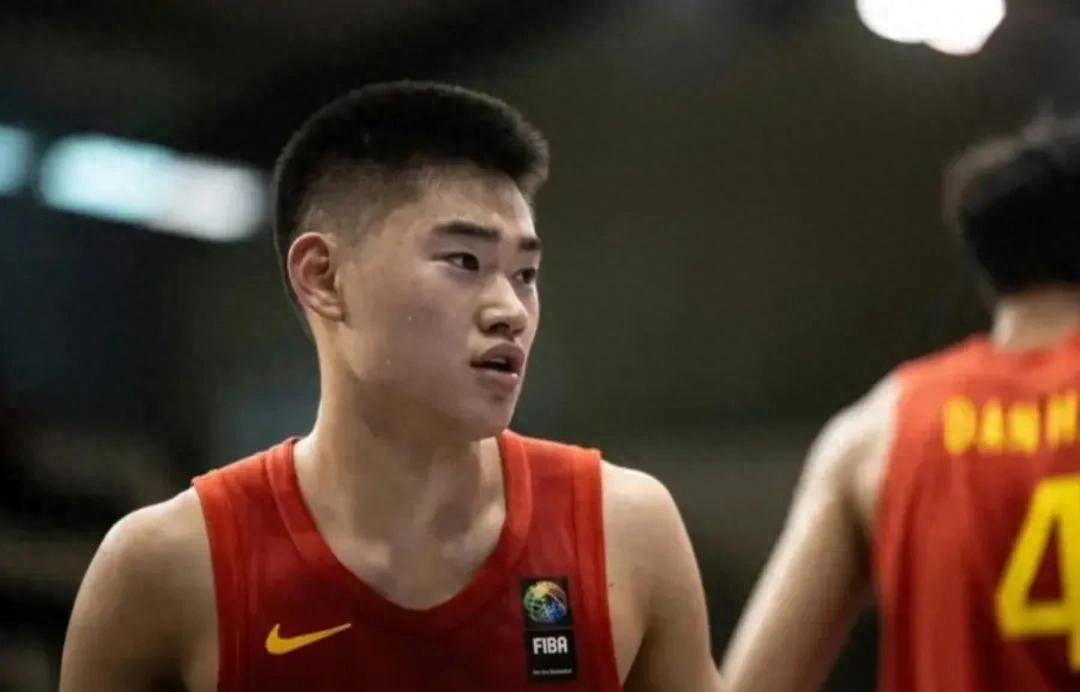
But if I asked, “What is Zhao Weilen’s signature performance?”
Many would still point to the June 2023 U19 Men’s Basketball World Cup group stage game where China lost 79-88 to Canada.
He came off the bench for 24 minutes, shooting 9 of 10 overall, including 4 of 5 from three-point range; made 3 of 5 free throws, scoring 25 points with 4 assists, 2 rebounds, and 1 steal. In the fourth quarter alone, he scored 15 points in under 4 minutes, with 18 points in that quarter.
The past two years have been relatively quiet for him.
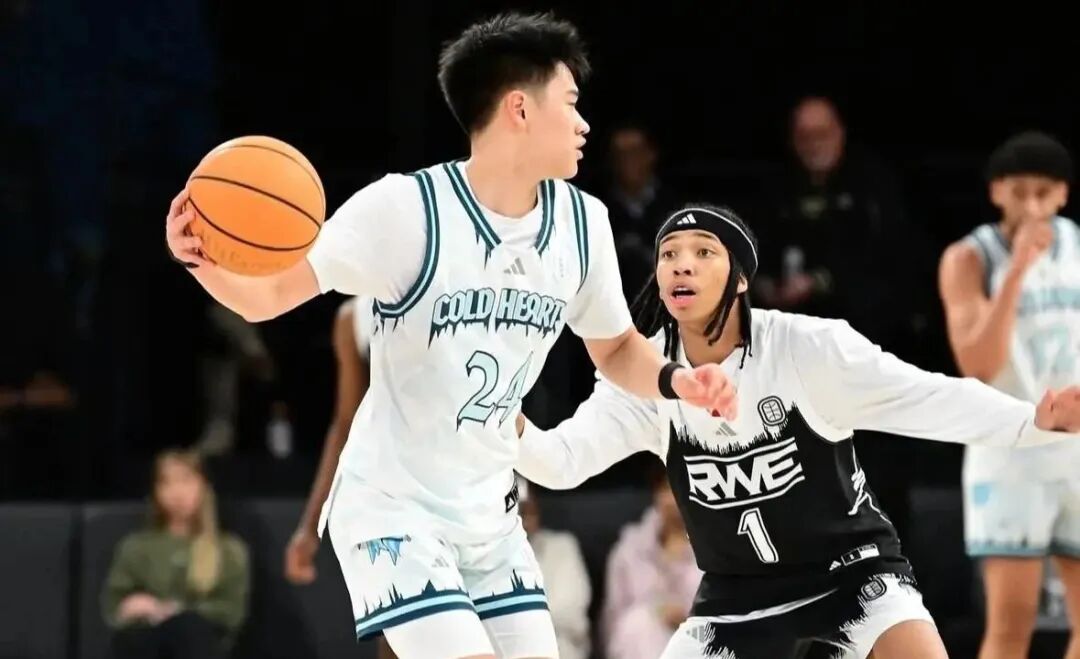
In the 2024-25 season, he joined the OTE league.
During the regular season, playing for Cold Hearts in 14 games, he averaged 29.2 minutes, 13.9 points, 2.1 rebounds, 6.6 assists, and 1.3 steals, with shooting percentages of 47.8% from the field, 42.5% from three, and 91.4% from the free-throw line.
Due to injury, he only played one playoff game, contributing 15 points, 4 rebounds, and 5 assists.
Then in May last year, he decided to take his talent to the NCAA and became teammates with Wang Junjie.
So far, his playing time has been limited.
In the game against Northwestern State, he played 14 minutes, scoring 5 points on 1 of 4 shooting, and dished out 4 assists—his current career highs.
Compared to junior Wang Junjie, Zhao Weilen clearly holds a marginal role at the University of San Francisco and often ends up as DNP (Did Not Play).
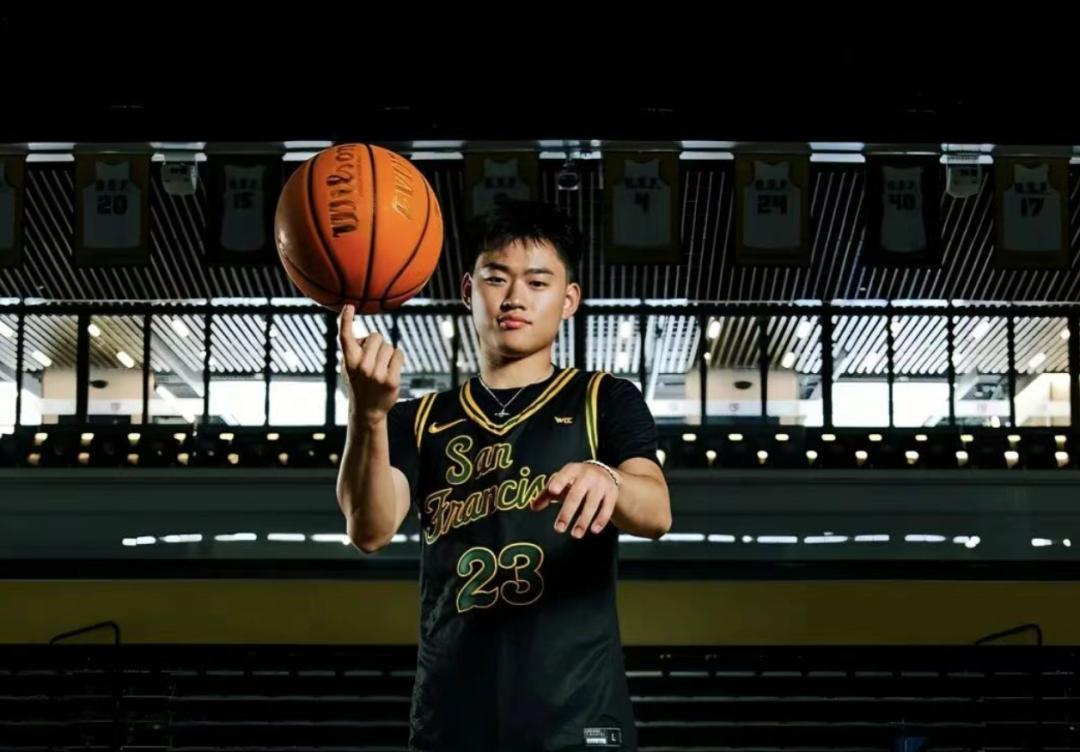
What does Di Ge think about this player’s development?
What sets Zhao Weilen apart from other domestic guards?
His decision-making with the ball.
The style of basketball a player plays is closely tied to their development environment.
Zhao Weilen grew up in the European system, so he is very accustomed to structured play and tactics.
However, don’t forget that most of his experience in Italy was with youth teams or second-tier leagues. Now 20 years old, he still lacks enough high-level game experience in adult leagues.
From his OTE games, if given the ball, he can indeed lead teammates to play cohesively.
But OTE lacks the tactical discipline of his previous team, and the game quality isn’t very high—it sometimes feels more like an exhibition.
His playmaking skills are easy to showcase in that league.
At the University of San Francisco, things are quite different.
For one, the team doesn’t lack guards.
There’s the 24-year-old “older guard” Masich and 21-year-old Ryan Beasley...
So it’s normal for a freshman like Zhao Weilen to be marginalized.
It’s unclear whether he will consider transferring next season.
But what I believe limits Zhao Weilen’s further progress is his physical ability.
At 183 cm, he is naturally at a disadvantage as a guard, especially when switching defense against more athletic opponents; his size makes it harder to shake defenders and he is vulnerable to targeted one-on-one attacks on defense.
This issue is not just in the NCAA; it was evident in the U22 National Games preliminaries when he represented the Liaoning men’s team.
In the first game against Jiangxi, Ye Runfeng (a player from Overseas Chinese University) scored 24 points in the first half—many possessions were against Zhao Weilen’s defense.
Although he scored 20 points with 4 rebounds and 4 assists in that game, he also had 6 turnovers.
High turnovers partly stem from lack of chemistry with teammates, as the National Games teams are mostly assembled temporarily.
But his difficulty in handling physical contact also played a role.
Finally, two points worth mentioning:
1. Zhao Weilen is 10 centimeters shorter than another domestic guard playing in the NCAA, Lin Wei.
2. Wang Junjie’s excellent performance is partly due to his larger physique...
Playing a physical style of basketball has somehow become a “negative” label in our context...


Wonderfulshortvideo
Coop makes history 😱


Steph & LaMelo shot the lights out 🤩
What a
Luka & LeBron led the @Lakers to a win, combining for 73-pts on the night 🤩
Steph’s range is insane 😳 (via bry.p.c/IG)
🏆 Clarkson coming in CLUTCH 🏆
Short… SIKE
 Links
Links
 Contact
Address:UNIT 1804 SOUTH BANK TOWER, 55 UPPER GROUND,LONDON ENGLAND SE1 9E
Number:+85259695367
E-mali:icecmxtdaf@gmail.com
 App
App


