



A detailed analysis of LeBron James missing the All-Star selection: New format brings fresh challenges, and fan advantage disappears?



On December 30th Beijing time, the last time LeBron James was not selected for the NBA All-Star was when he was a 19-year-old rookie, Curry and Durant were still in high school, and Garnett was the Timberwolves’ regular season MVP that year. Since then, LeBron has been an All-Star for 21 straight seasons, a record-breaking achievement that might soon conclude.
There are three primary routes for NBA players to be chosen as All-Stars. The first is through voting to select five starters from each conference, where fan votes count for 50%, and player and media votes each account for 25%. The second method involves coaches from all 30 teams voting to pick seven reserves from each conference. The third is selection as a replacement for injured All-Star players, which is common and partially explains why the total number of All-Stars often exceeds 24 each season.
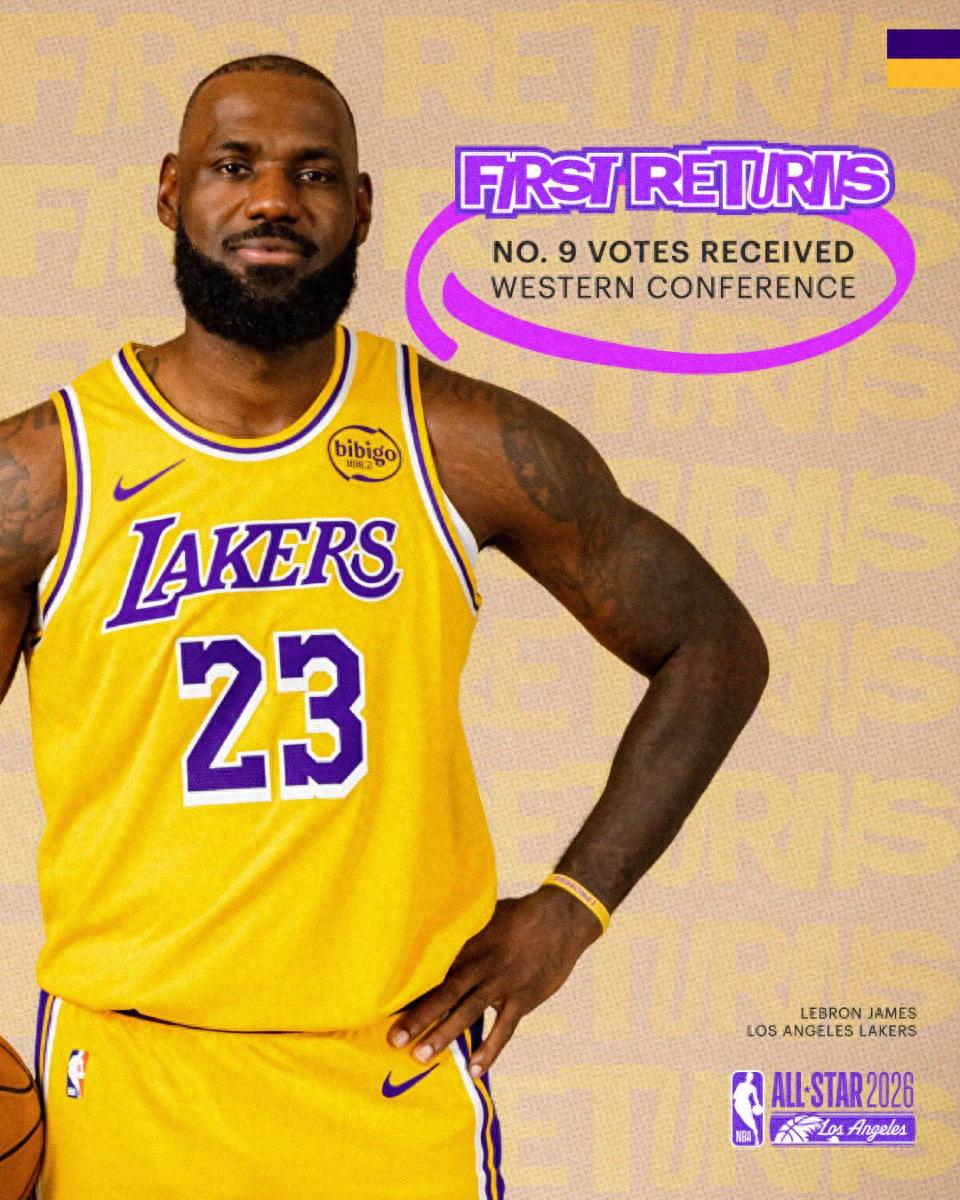
The NBA recently released the first round of fan voting results, with LeBron ranking only ninth in the Western Conference, far from a starting spot.
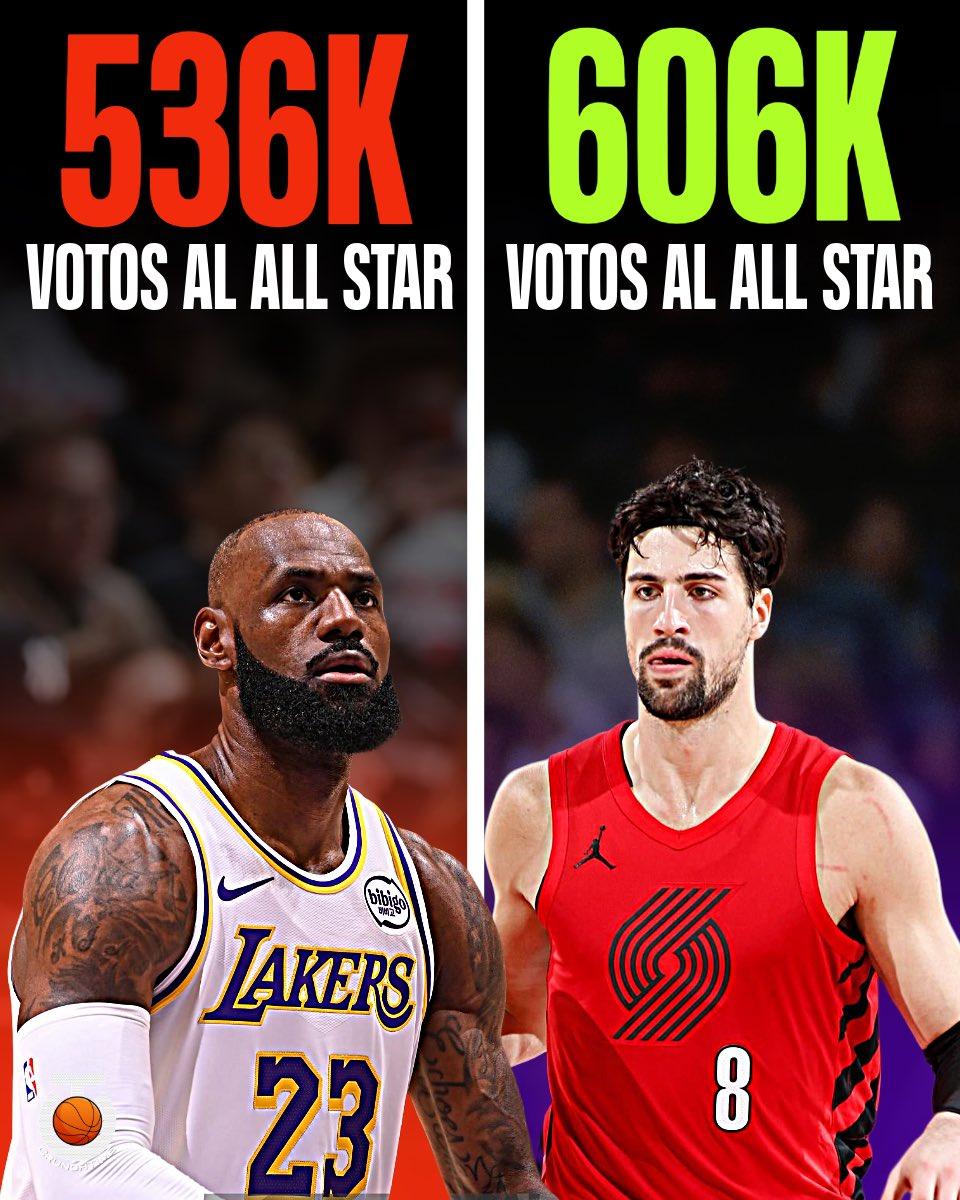
Although he still has ample time to catch up—the fan voting continues until January 15, and the player and media votes could potentially elevate him to a starting position—the fact that he currently ranks ninth in the West is notable. Even the Blazers’ Avdija has more votes than LeBron.
Last season, LeBron ranked second in fan voting as a frontcourt player, receiving over 3.3 million votes (this season is the first to use positionless voting). In 2024, he led the fan voting, and from 2016 (Kobe’s retirement) through 2023, he consistently received the highest number of fan votes league-wide. Though he is no longer at his peak, this season is the first time this has shown in the All-Star voting results.
Can LeBron still make the All-Star team as a reserve?
Even if he does not make the starting lineup, LeBron still has a chance to be selected as a reserve, but the NBA’s new format adds restrictions to his path. In theory, he can compete for any of the seven reserve spots in the Western Conference, but this season’s 24 All-Star players will be divided into three teams of eight players—two teams composed of U.S. players and one team of international players.
According to ESPN, the NBA has addressed related concerns, clarifying that this format does not actually limit the number of spots:
"The league answered another unresolved question—if the 24 players selected do not perfectly divide into 16 U.S. players and 8 international players, will the voting results be forcibly adjusted to meet this ratio? The solution is: if the selected players do not meet the 16-to-8 ratio, NBA Commissioner Adam Silver will add extra players to ensure at least 16 U.S. players and 8 international players are included."

However, this player ratio requirement could influence coaches’ voting decisions, increasing the pressure on LeBron’s selection chances.
Assuming the first-round fan voting results finalize the starters, the Western starters would include Doncic (Slovenia), Jokic (Serbia), Curry (USA), Alexander (Canada), and Wembanyama (France); the Eastern starters would be Antetokounmpo (Greece), Brunson (USA), Maxey (USA), Cunningham (USA), and Mitchell (USA).
This means that for the reserves, three international players and eleven U.S. players still need to be selected. Western players like Sengun (Turkey), Avdija (Israel), and Jamal Murray (Canada) are likely to fill those three international slots, leaving LeBron to compete with Edwards, Durant, Reeves, Booker, Markkanen, Butler, Holmgren, and Harden for only four remaining spots. Despite his illustrious career, his chances of selection look uncertain.
Additionally, he would need international players like Wagner (Germany) or Giddey (Australia) to make the Eastern team to free up an extra cross-conference spot for a U.S. player. Even then, LeBron must not only compete with Western contenders but also face challenges from Eastern fringe All-Star candidates like Powell, Ingram, and Anunoby.
LeBron urgently needs fan support to preserve his All-Star streak
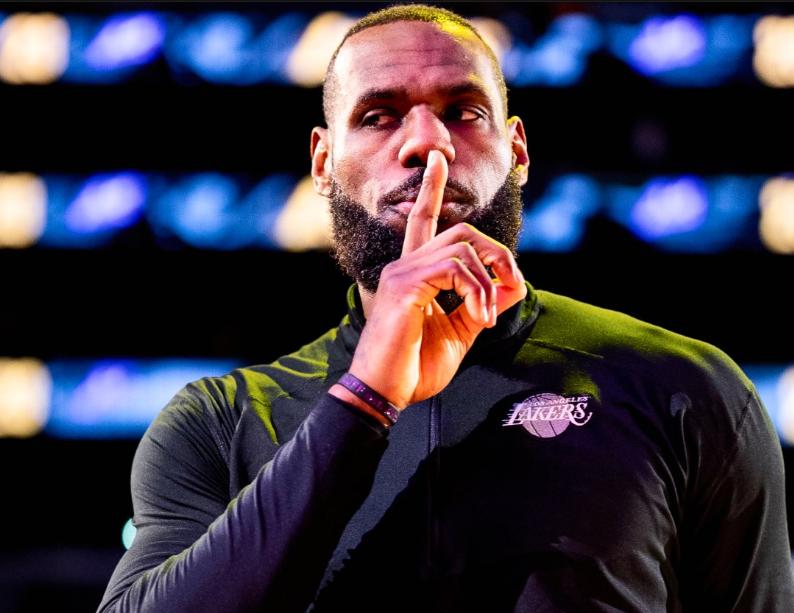
LeBron’s stats this season remain solid—averaging 20.5 points, 6.7 assists, and 4.9 rebounds per game—but they have noticeably declined compared to last season. Due to a sciatic nerve injury, he missed early season games and has played only 14 so far. However, he has previously made the All-Star team in seasons with diminished performance. Between 2019 and 2023, despite playing over 60 games in only one season, he was selected as an All-Star every year. During those seasons, fan voting saved him, securing his starting spot before media, opponents, and coaches could give harsher evaluations.
This season, however, it seems he may lose that advantage, which could be enough to end one of the most remarkable records in league history.


Wonderfulshortvideo
ON CUE 🎶 Happy Birthday LeBron James 🎶


HAPPY BIRTHDAY LEBRON
What a
Bron 🤝 Squad
Replying to @NBA Steph had to put on a show in front of Ayesha and Canon Curry 🥺
Shaedon Sharpe rocks the rim with a windmill slam 😤
Trick shots pregame party!!
 Links
Links
 Contact
Address:UNIT 1804 SOUTH BANK TOWER, 55 UPPER GROUND,LONDON ENGLAND SE1 9E
Number:+85259695367
E-mali:icecmxtdaf@gmail.com
 App
App


